Micro Macro Board Game Art - The Perfectly Staged Crime - Interview with Johannes Sich
In this board game art interview, I’m speaking to Johannes Sich, creator, designer, and artist of Micro Macro, a series of ‘hidden picture’ detective board games.
The series started in 2020 with Micro Macro: Crime City and now features 4 editions and a new digital app. In Micro Macro, you and your friends are given the task of solving increasingly complex cases together. To solve the cases, you’ll be given clue cards that ask you to examine a map of a city and its inhabitants. The city map serves as a map in time as well as space, so you'll typically find people in multiple locations throughout the streets and buildings, and you need to piece together what happened to solve the case at hand.
Considering these spaces are literally packed with criminal activity, these worlds don’t feel dark, but exude childlike whimsy and a constant sense of discovery. Johannes was kind enough to join me to reveal how it was all made.
Enjoying the site? Consider supporting it by sharing the articles you read.
For more great insights into board game art, check out the interview archive.
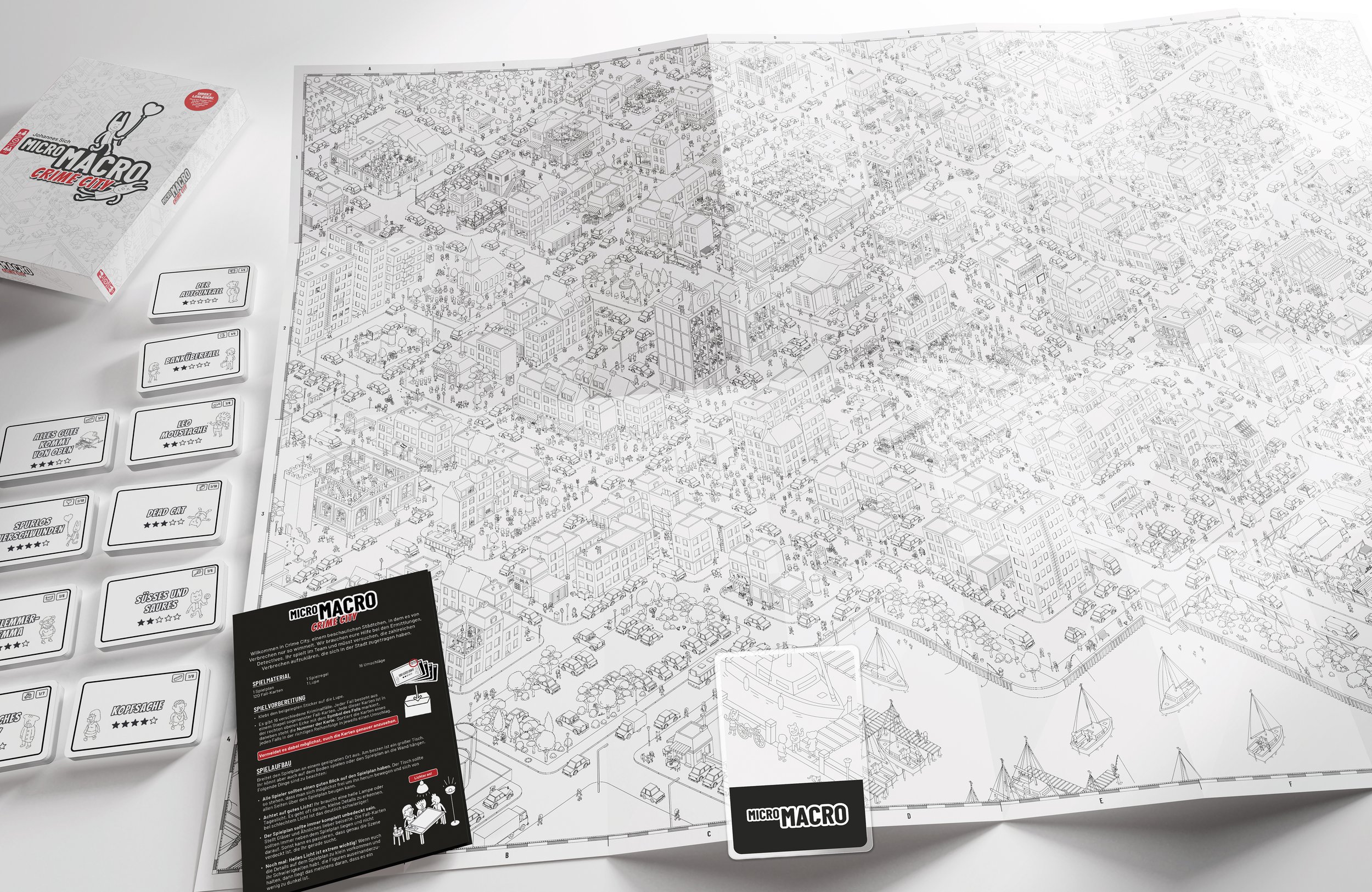
Micro Macro: Crime City board game
Thanks for joining us, Johannes! Could you tell us a bit about yourself?
Hi, thank you for having me in your interview section, which I really like. I am a game designer and illustrator, and together with my colleagues Daniel Goll and Tobias Jochinke, we created the MicroMacro game series.
I am from the rural area of the Rheinland/Ruhrgebiet in Germany, and I live in Düsseldorf with my wife and daughter. The studio where we work is not far, so I can walk or go by bike and have a coffee on my way (very important). This studio is originally a design studio, but nowadays the three of us work mainly on MicroMacro, supported by a team of coworkers and freelancers.
I met my colleagues when we studied Communication Design. We became close friends and frequently worked together on various projects. While they built a studio focused on Communication Design, I worked as a freelancer in illustration across many different areas. I was always troubled with my own ideas and interests in drawing, storytelling, worldbuilding, game design, and puzzle design.
When MicroMacro came out and became a success, everything fell into place, and now I have the pleasure of creating a world of story-driven, illustrated crime puzzle games all day long.
How did you first break into the tabletop industry?
During our time at university, we were already interested in creating games. When choosing a project for my diploma, I came up with La Cosa Nostra, a card game with a mafia theme and a strong focus on player interaction and negotiation. Initially, it was merely an excuse to create a bunch of badass gangster characters, and for my diploma, only the visual design mattered.
I became fascinated by creating the game mechanics, too. It took me years to design the final game, since I had no experience in this area, and I had to learn a ton of things. Even then, I got a lot of support from Tobi and Daniel, and together we started a crowdfunding campaign to self-publish it. It's a quite successful little indie game, at least in Germany. It was quite a ride of a project with many challenges. We got plenty of insights, contacts, and inspiration from diving into the board game scene as a self-publisher.
One of the biggest lessons was that we didn't want to spend our time on publishing work; we wanted to focus on the creative part. So when we developed the idea for MicroMacro, we looked for a professional publisher early on.
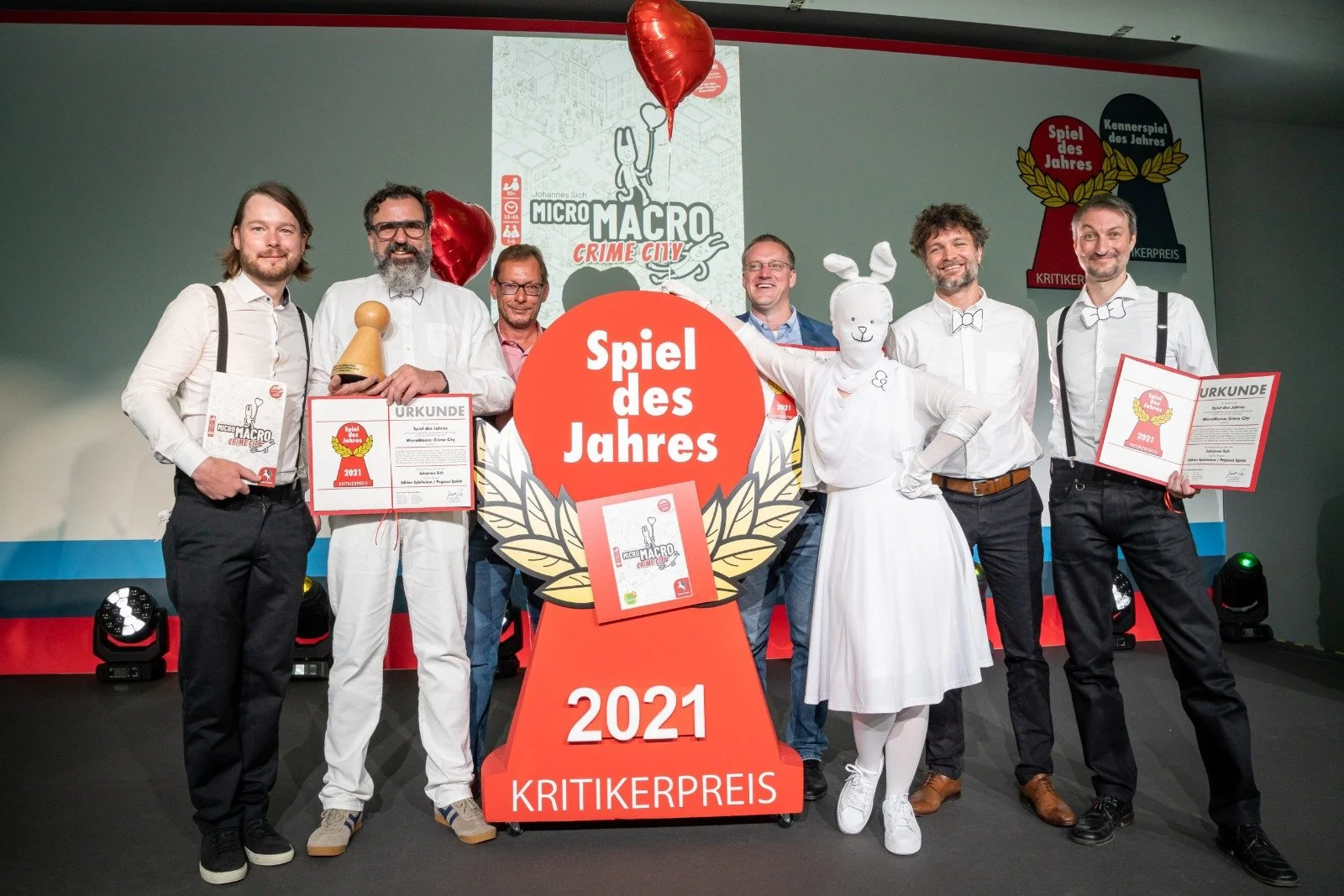
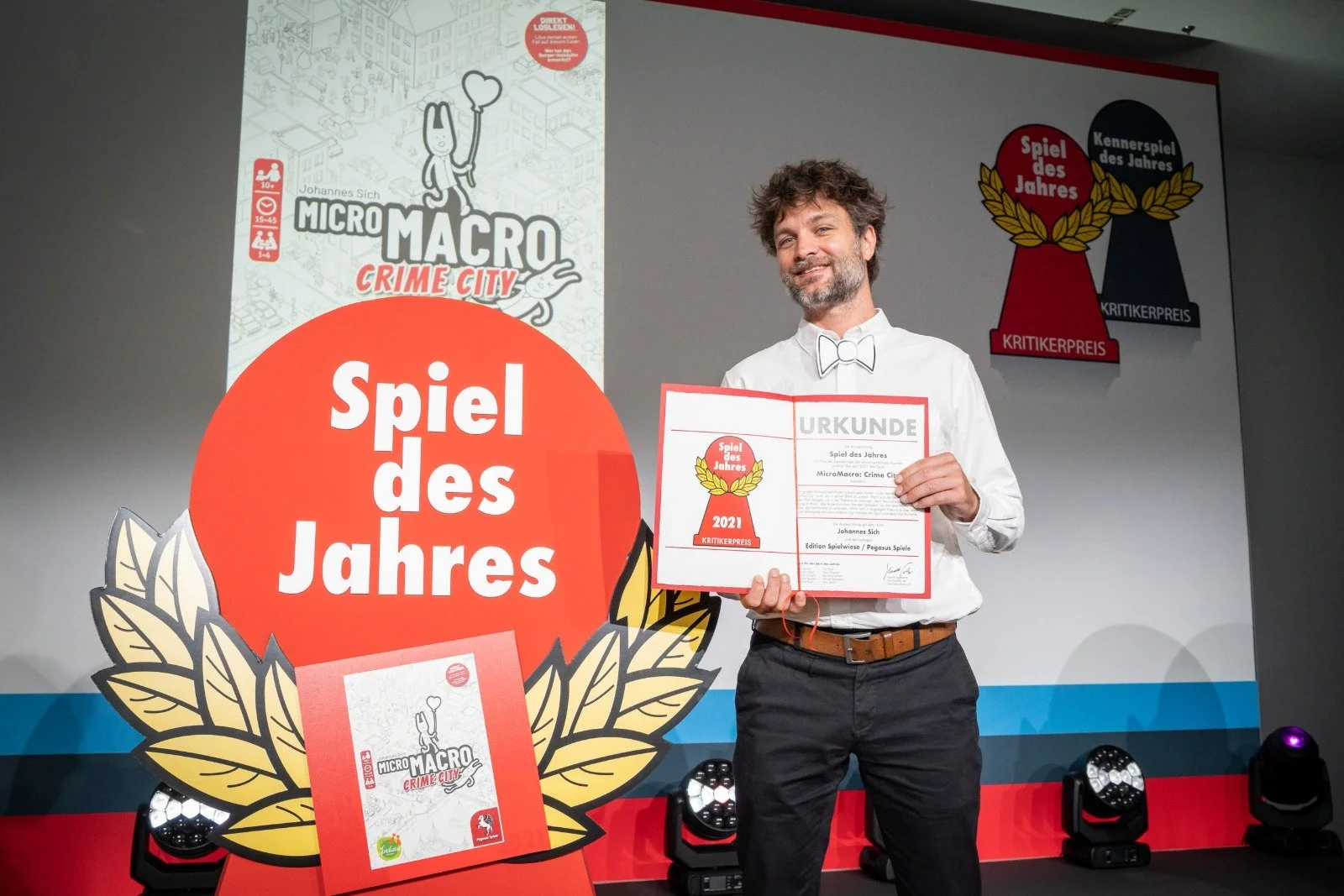
Fast forward to 2021, MicroMacro: Crime City won Game of the Year at the biggest board game awards, the Spiel des Jahres. So, what is MicroMacro?
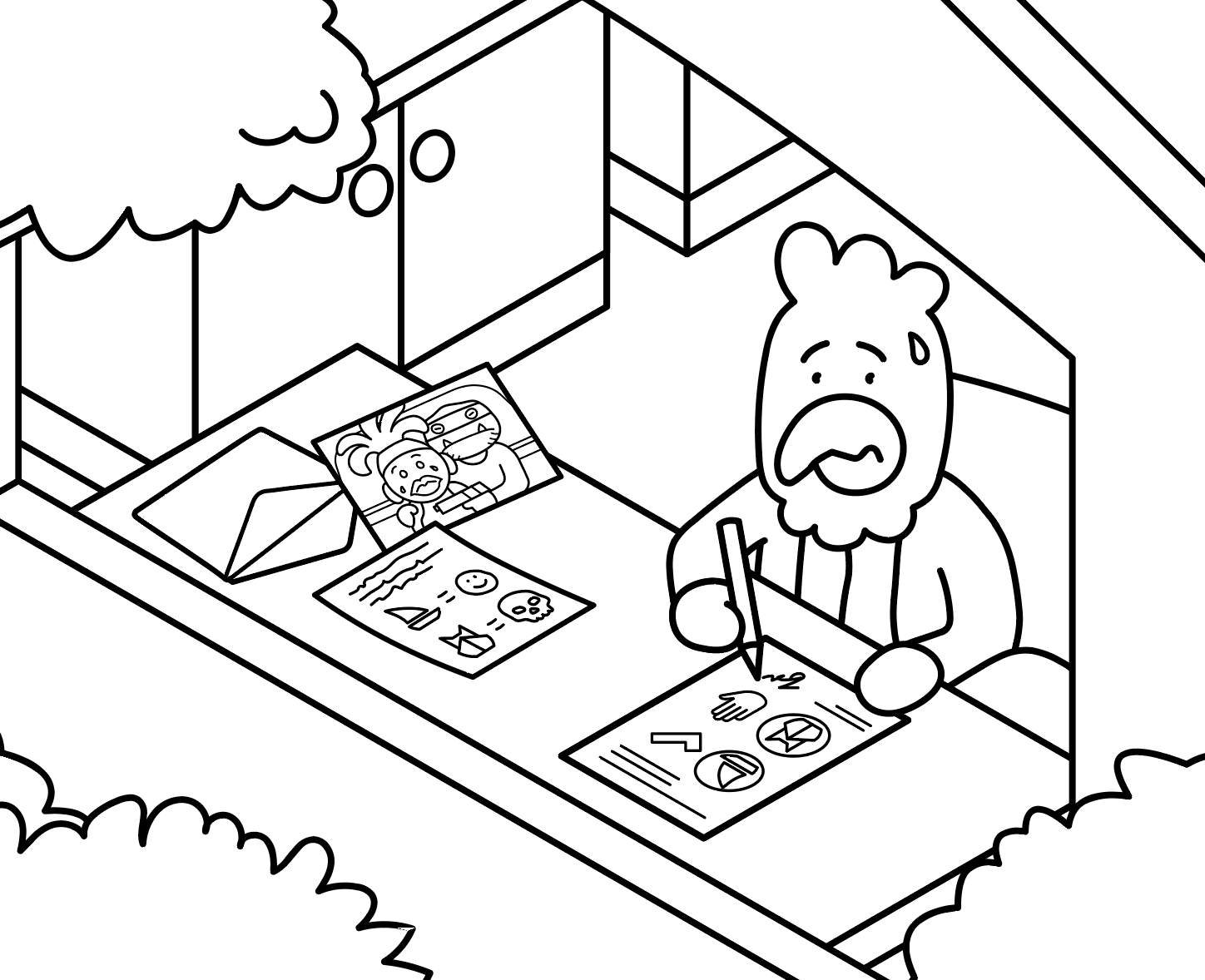
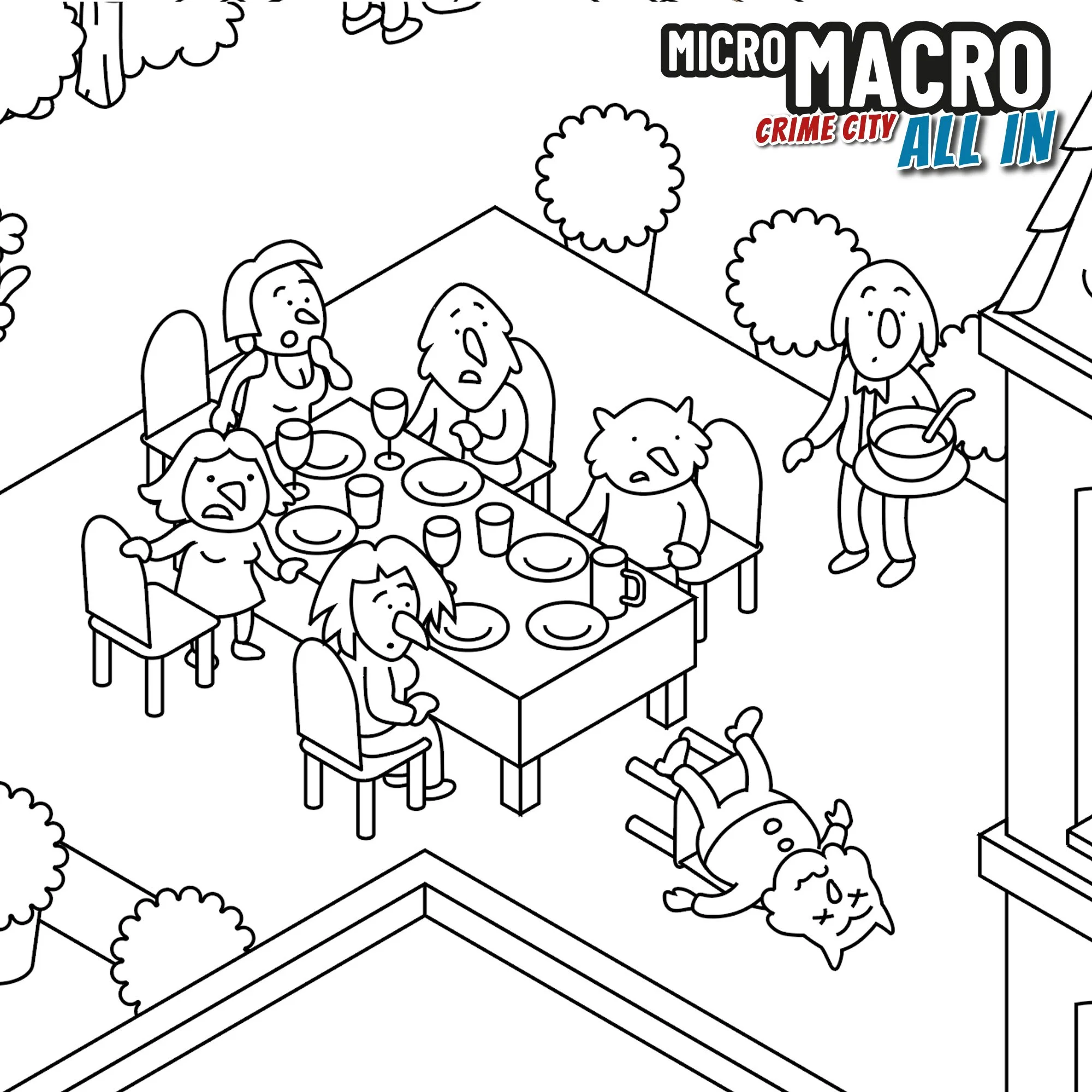
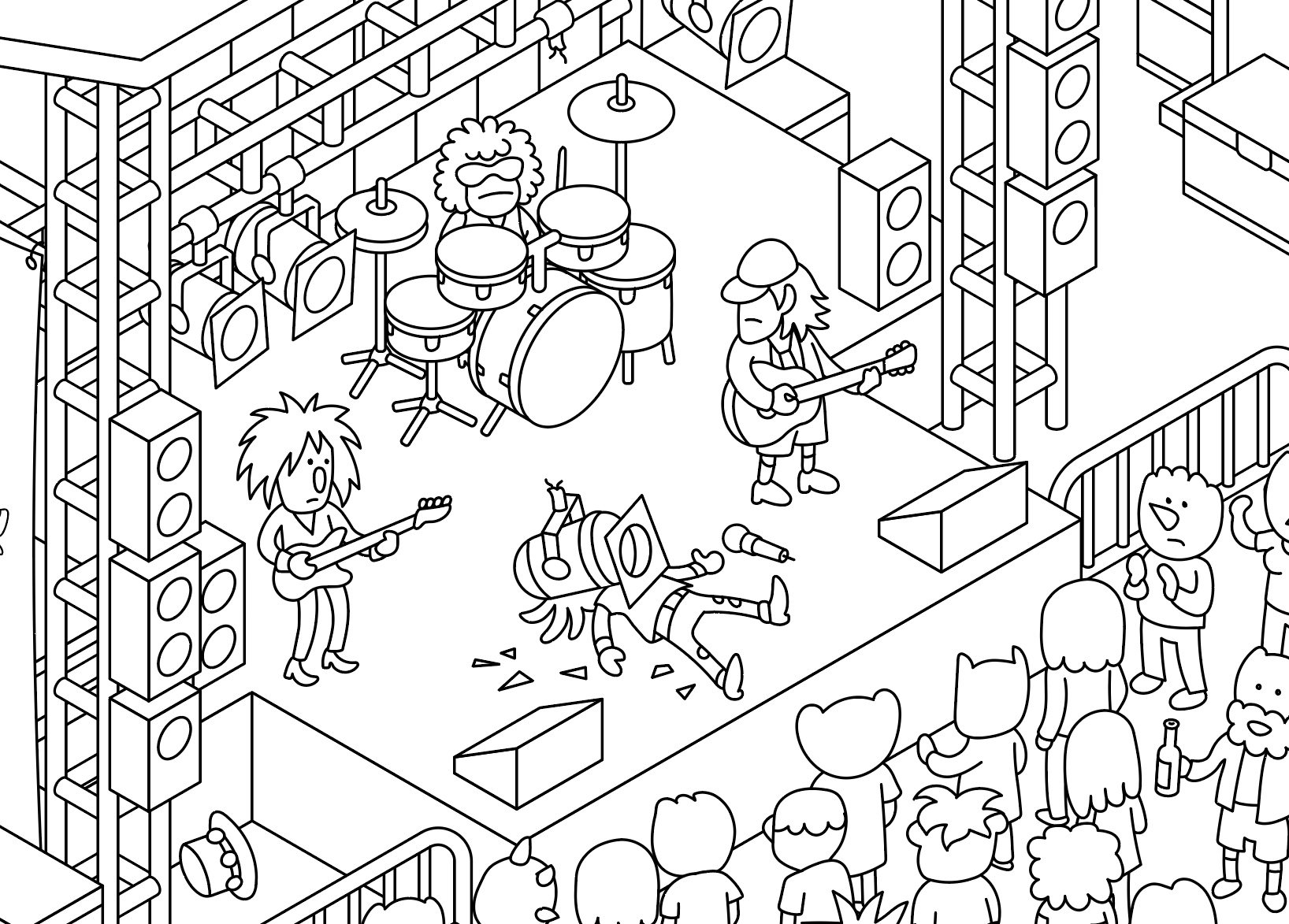
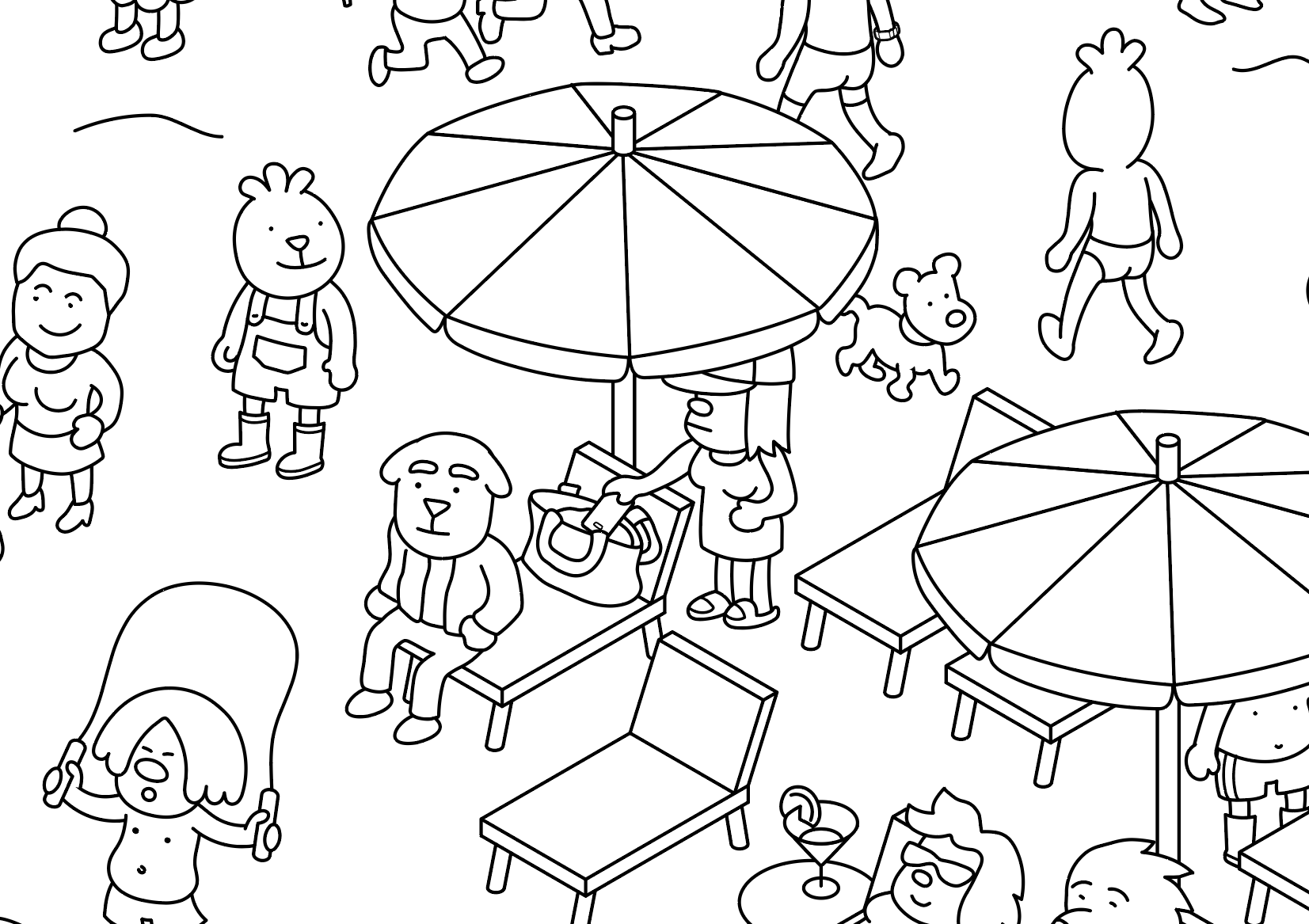
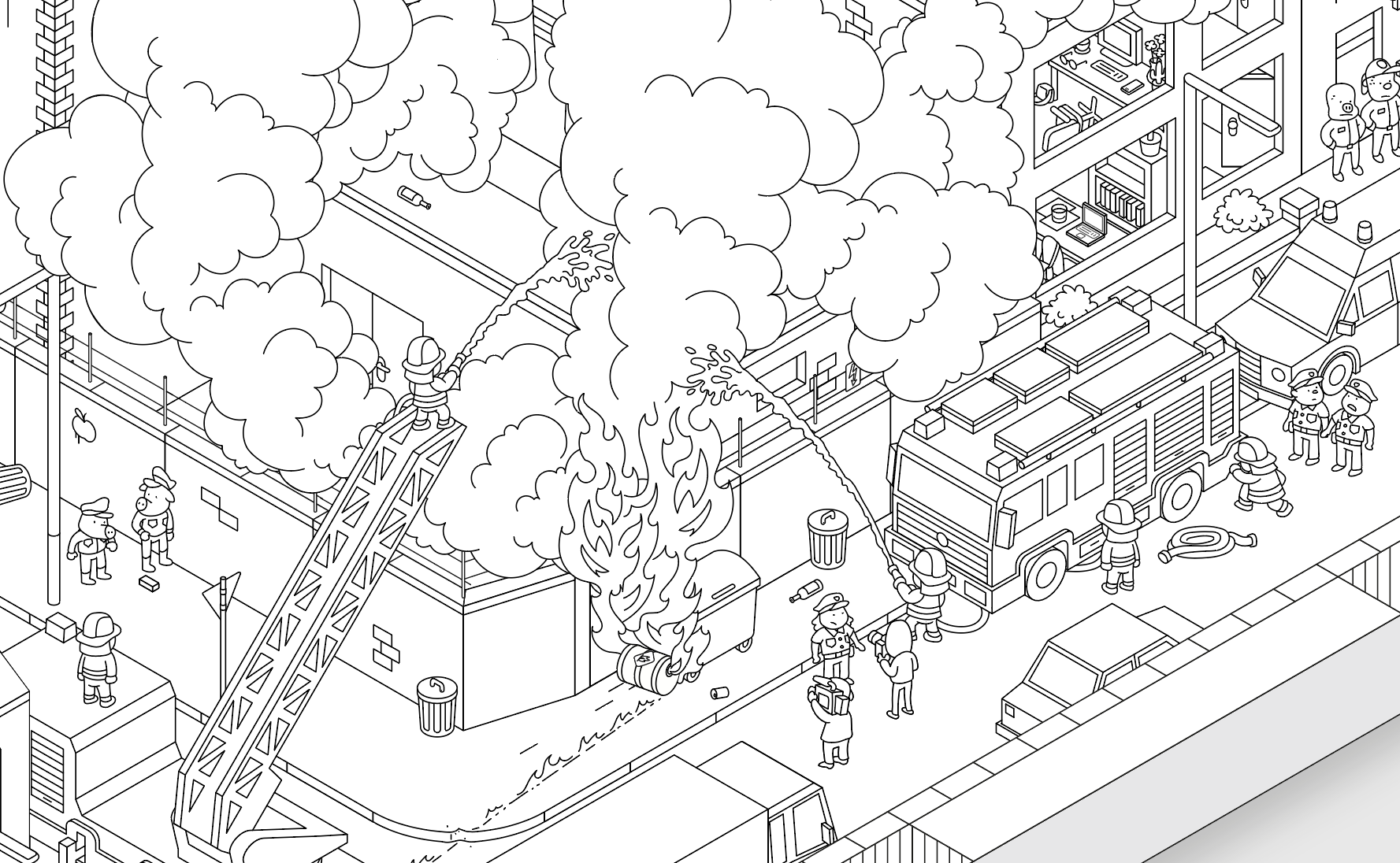
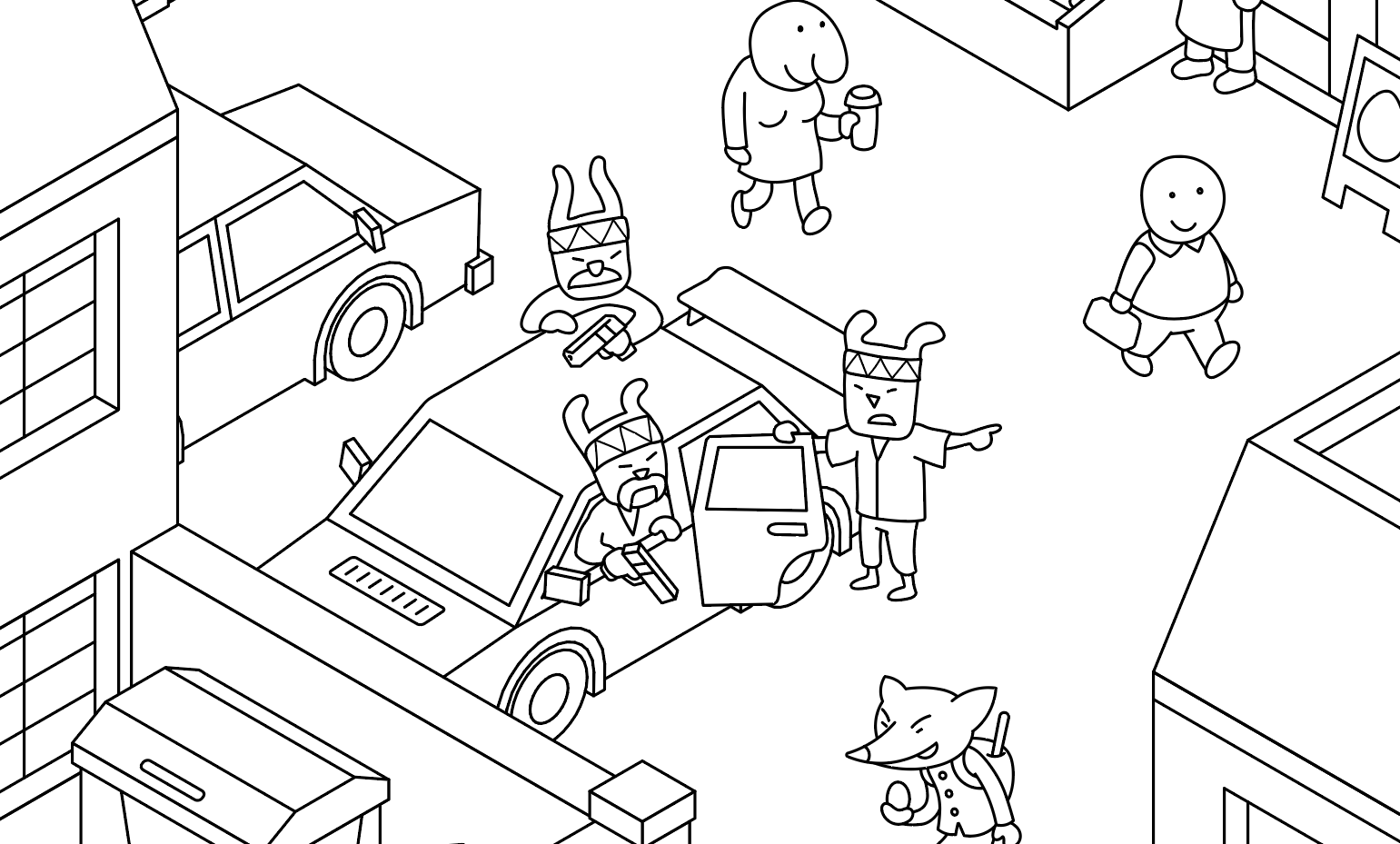
In MicroMacro, players work as a team of detectives to solve crime cases. The core of the game is a huge map, a gigantic illustration of a city, loaded with characters and tiny details. What's special about the concept? It's one big picture, but you can find the same character at multiple spots, doing different things at different moments in time. So you can follow them through the map and discover their stories.
There are plenty of crimes happening in this city, and as players, you must determine what happened. Who is the murderer? How did they do it? What was their motive? And so on. Question cards lead through the cases, and mostly it's not only about searching and finding, but also about solving little puzzles, combining your information, and thinking like a detective.
The first series, "MicroMacro: Crime City", consists of four games. While the game mechanics are suitable for children, the stories and crimes partly address adult themes. Players frequently asked us to create a version for children, and we did: Last year, “MicroMacro: Kids” was published.
Also, last year, we published our first digital adaptation. It's called “MicroMacro: Downtown Detective", and it’s already available for iOS and Android! This is very exciting for us!
Where did the idea for MicroMacro come from?
As gamers with a visual design background, we have always been interested in innovative game concepts that rely heavily on art design.
The very first idea we developed was in 2015. We wanted to make a puzzle game where you have to use your smartphone camera zoom like a magnifier to find tiny details in a huge illustration. Details so tiny that you can't even see them with your bare eyes. We were fascinated by the new possibilities in print and camera technology. Soon, we got the idea that the "huge illustration with plenty of details" had to be a city, and the "puzzles based on tiny details" required a detective theme.
We developed the first prototype with a first case, "Dead Cat," and playtested it. And people loved it. They wanted more of this. At that point, we discovered that one of the biggest advantages of the concept was the accessibility. You don't need to read the rules or do a lot of preparation. (Well, you do need a big table and good lighting!) And this advantage was even stronger without needing to use a smartphone, so we got rid of this. (But this idea is still in our heads, maybe one day we'll make this version.)
Hidden picture books like Where’s Wally? were a big part of my childhood. Was MicroMacro inspired by series like these?
In Germany, we have a huge tradition with picture books called "Wimmelbilder", which work like "Where’s Waldo". There are tons of those; everybody knows them, and we all grew up with them. But, surprisingly, we never thought about those when we had the first idea.
It was the other way around: We wanted to create a game where you had to find little details in a huge picture and piece them together. Only after we created the first prototypes did we realize: "Damn, this looks like a Wimmelbild!" We even tried to avoid this association in the beginning.
For a long time, we avoided calling it a "Wimmelbild" game. Later, we realized this was the best way to describe the game, so we overcame our reluctance.
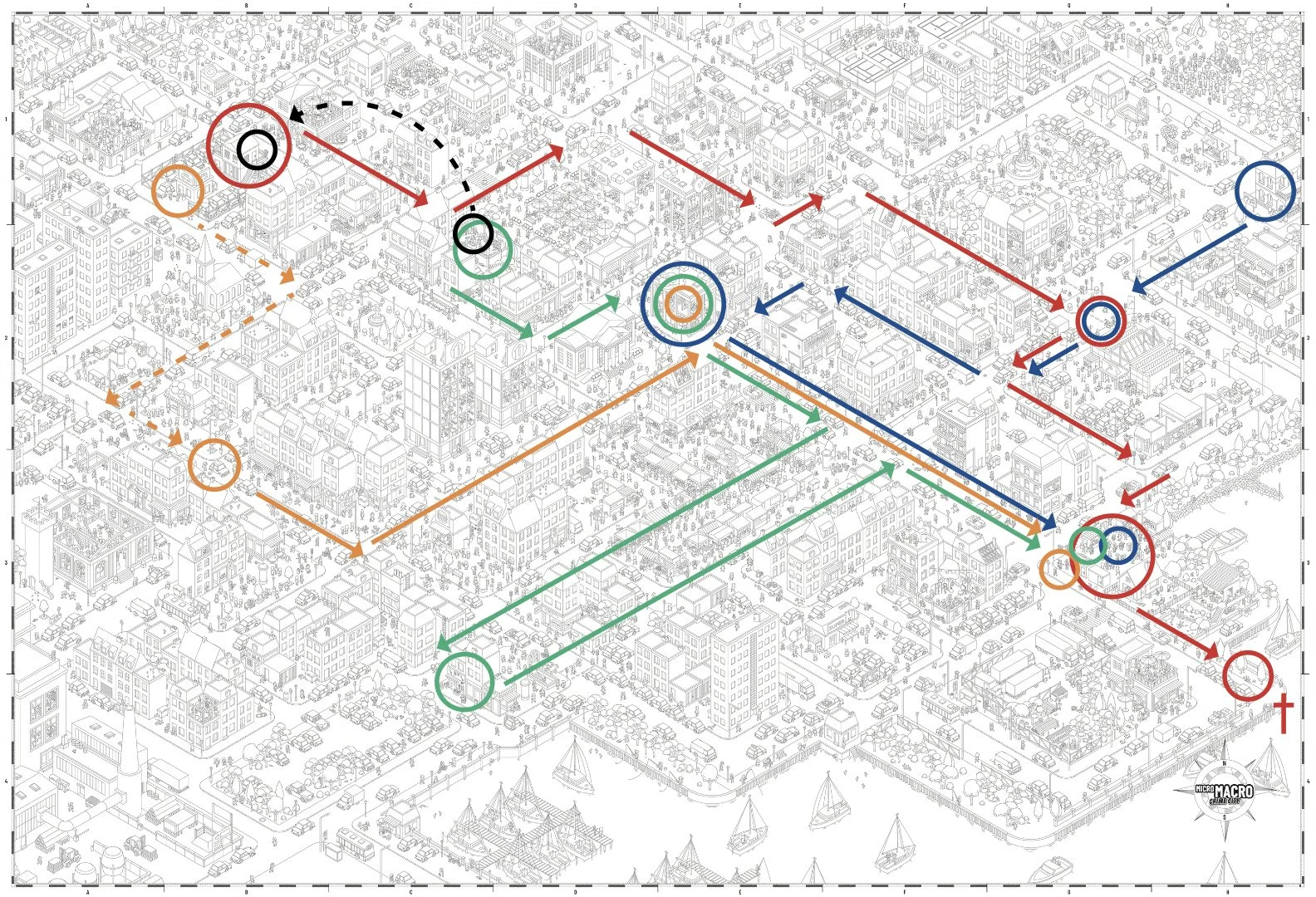
Micro Macro - Creating the City
The whole game of MicroMacro is set in a single illustration of one city, where everything is connected. What were the challenges in creating a prototype for this concept?
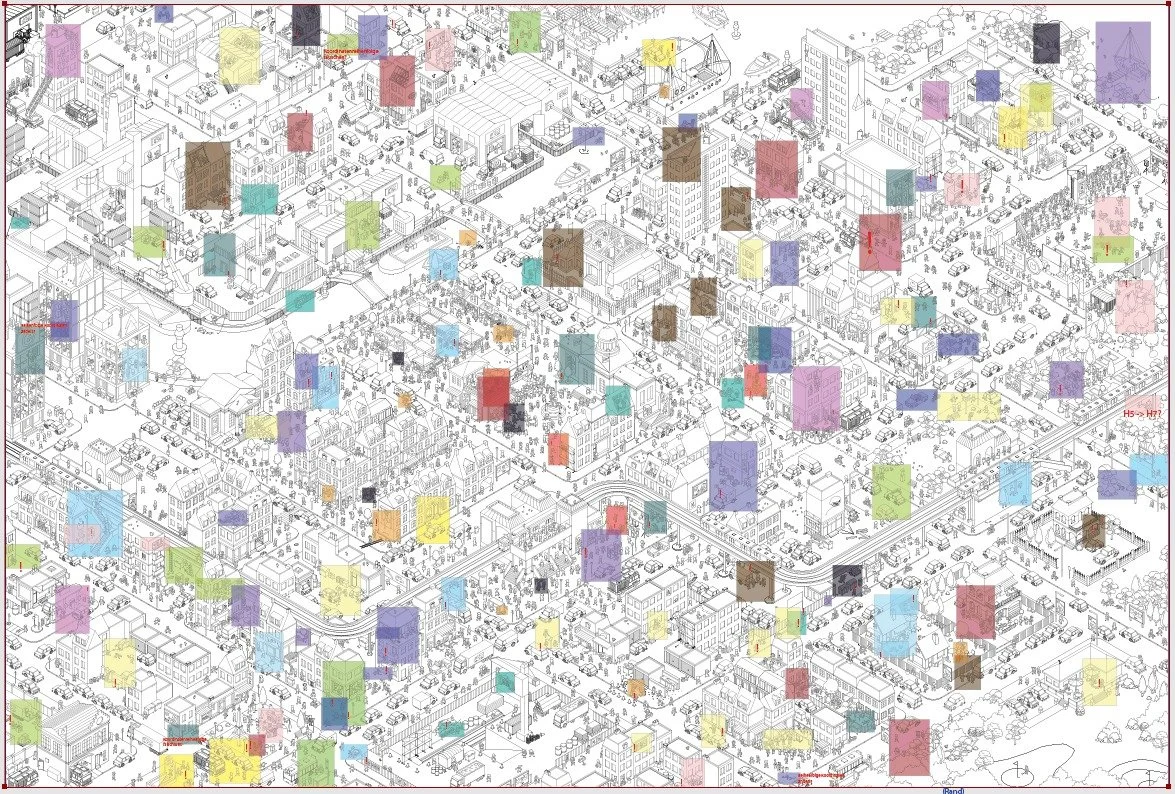
Yes, creating a prototype was the biggest challenge of our concept. Usually, you would playtest your first ideas with very rough prototypes to get basic insights early on. But in this case, an overwhelming abundance of detail is the core of the concept, so even a rudimentary prototype required a lot of work. Well, it was still veeeery rough. If you look at the first prototype today, it is quite ugly, with empty streets, houses, and cars that all look the same, and the characters are poorly drawn. But it worked! So we added more and more stories to it, and the city grew organically.
MicroMacro combines game mechanics, storytelling, and urban planning. How did you turn this first prototype into an entire city?
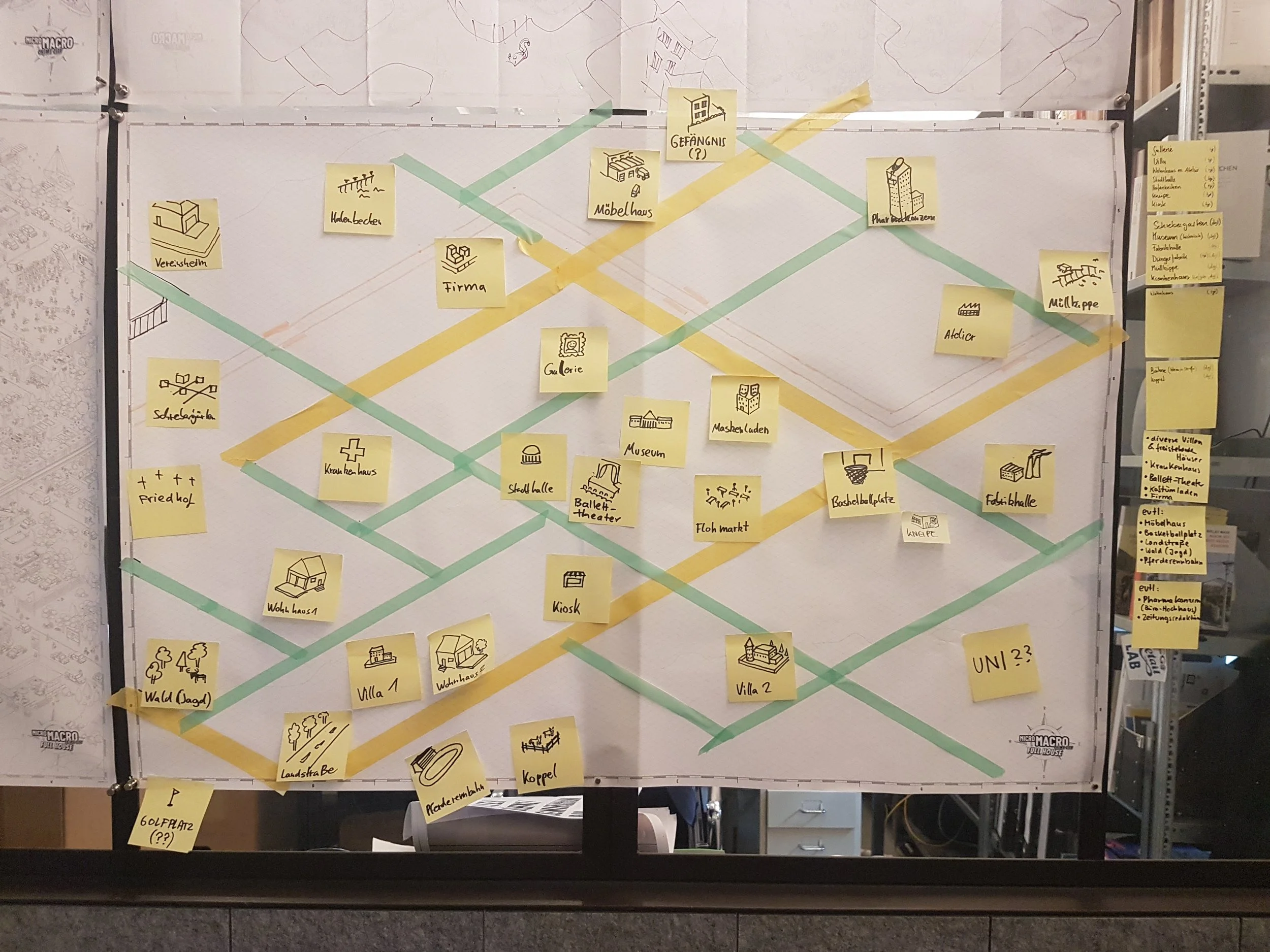
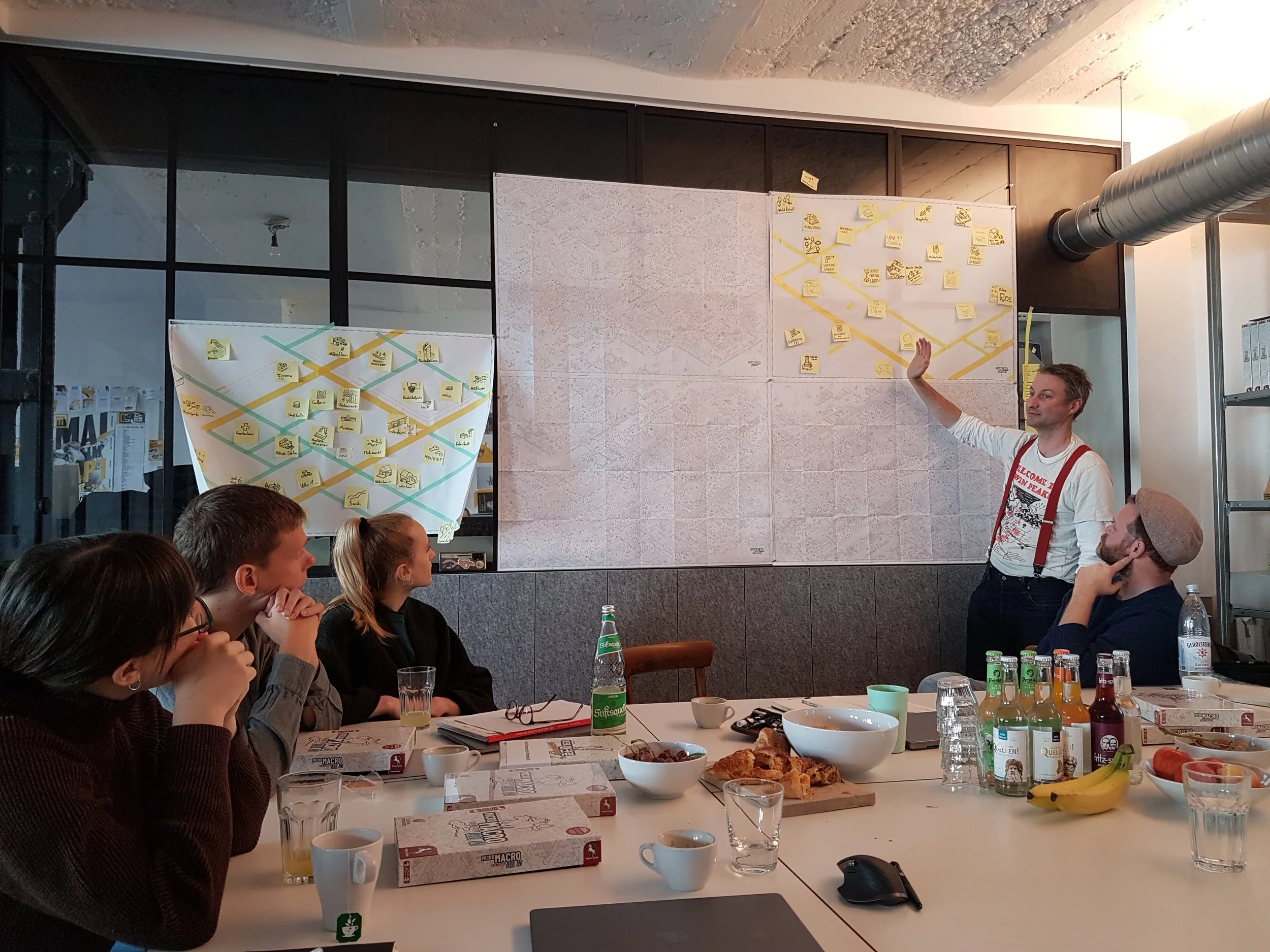
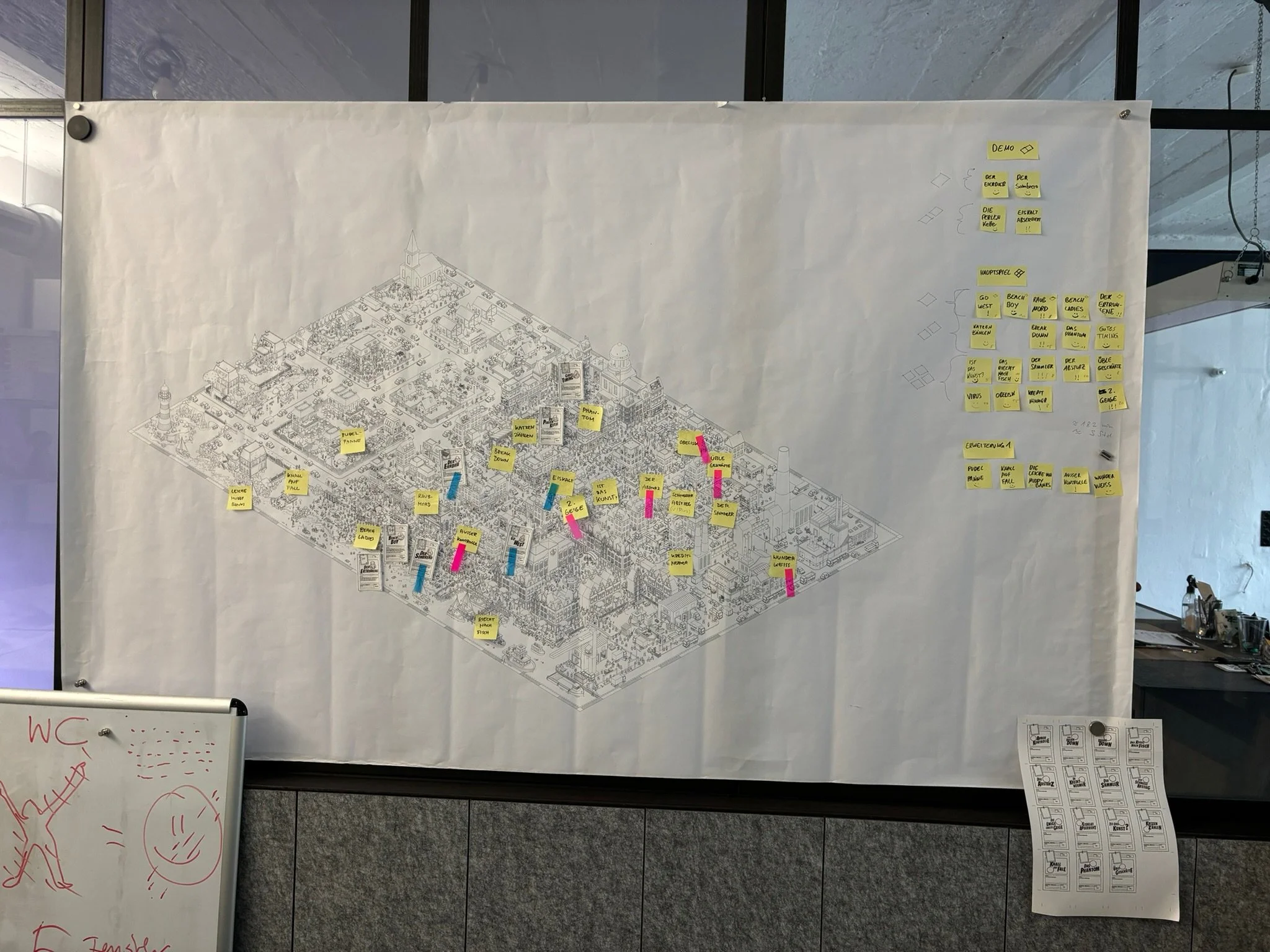
The stories came first, definitely. With every new story, we needed to add more special buildings, change the street grid, and rebuild entire blocks. After implementing a new case, we do extensive playtesting, which often reveals numerous issues in the puzzle designs. So we revise, playtest, revise, and so on. Thus, the city is constantly changing.
It was rather late in the process when we started revising everything to make it more appealing, which was quite a challenge. It took us a long time to establish a workflow for building a city and filling it with detail. We experimented a lot to make it work. It combines hand-drawn illustrations (characters, plants, details) and 3D-generated objects (houses, vehicles) to achieve a clearly structured yet organic and somewhat chaotic look.
Establishing a solid workflow was also important for us because we had already planned for MicroMacro to become a series. Only with an optimized workflow and organized asset libraries can we reproduce another version without spending another 5 years on it. We also had to experiment with material - what kind of paper, printing methods, how the paper would fold, what size of the map, stuff like this.
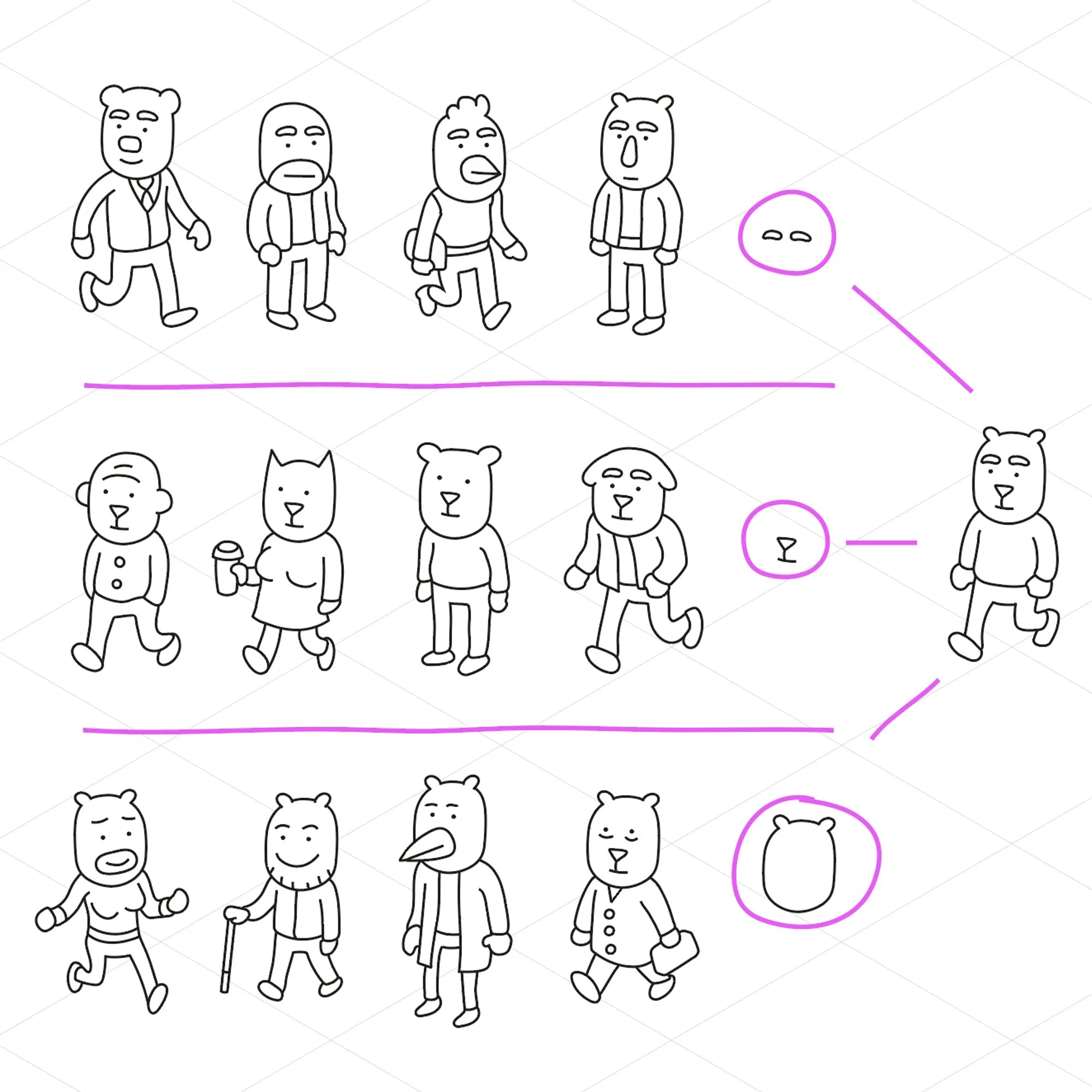
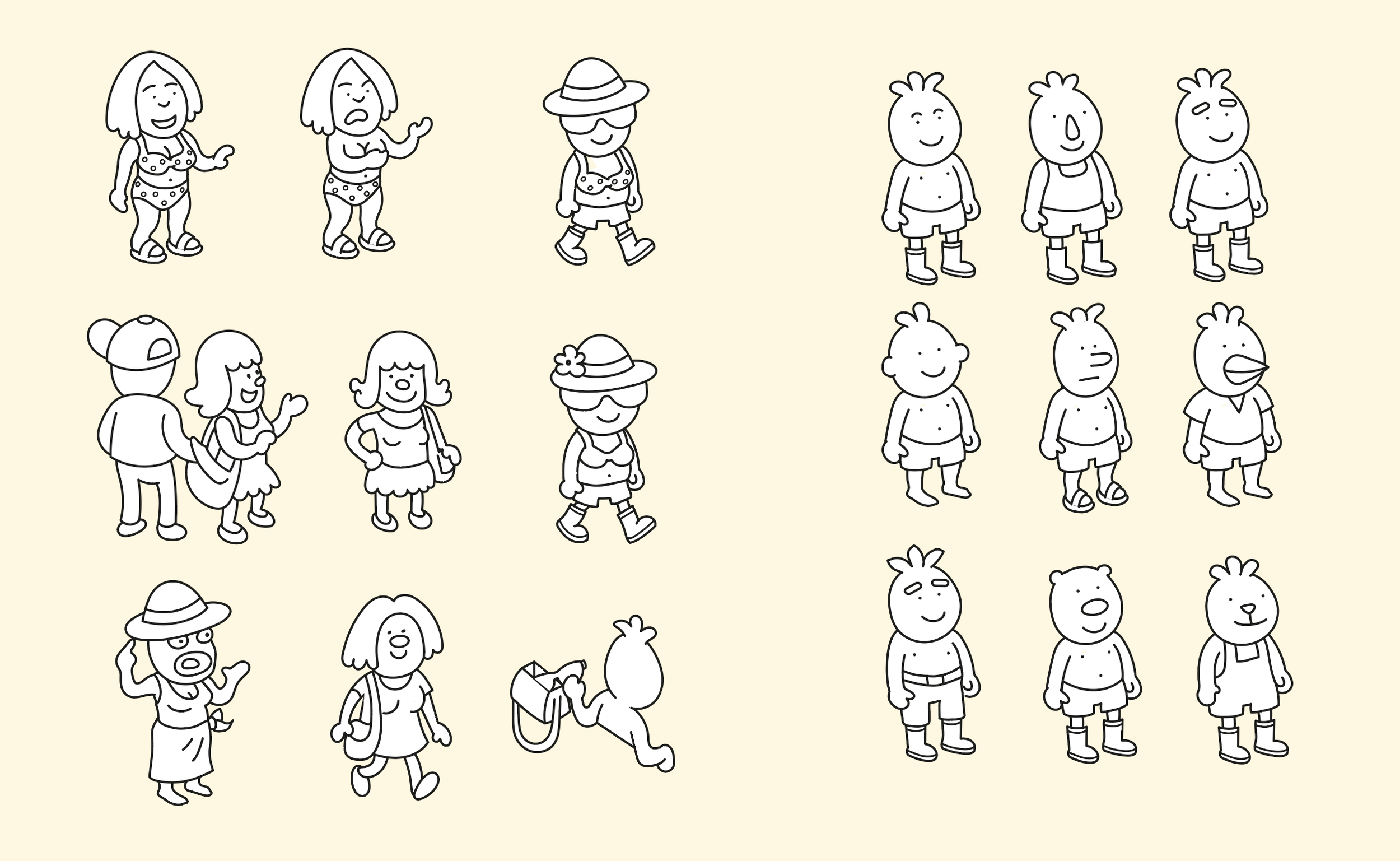
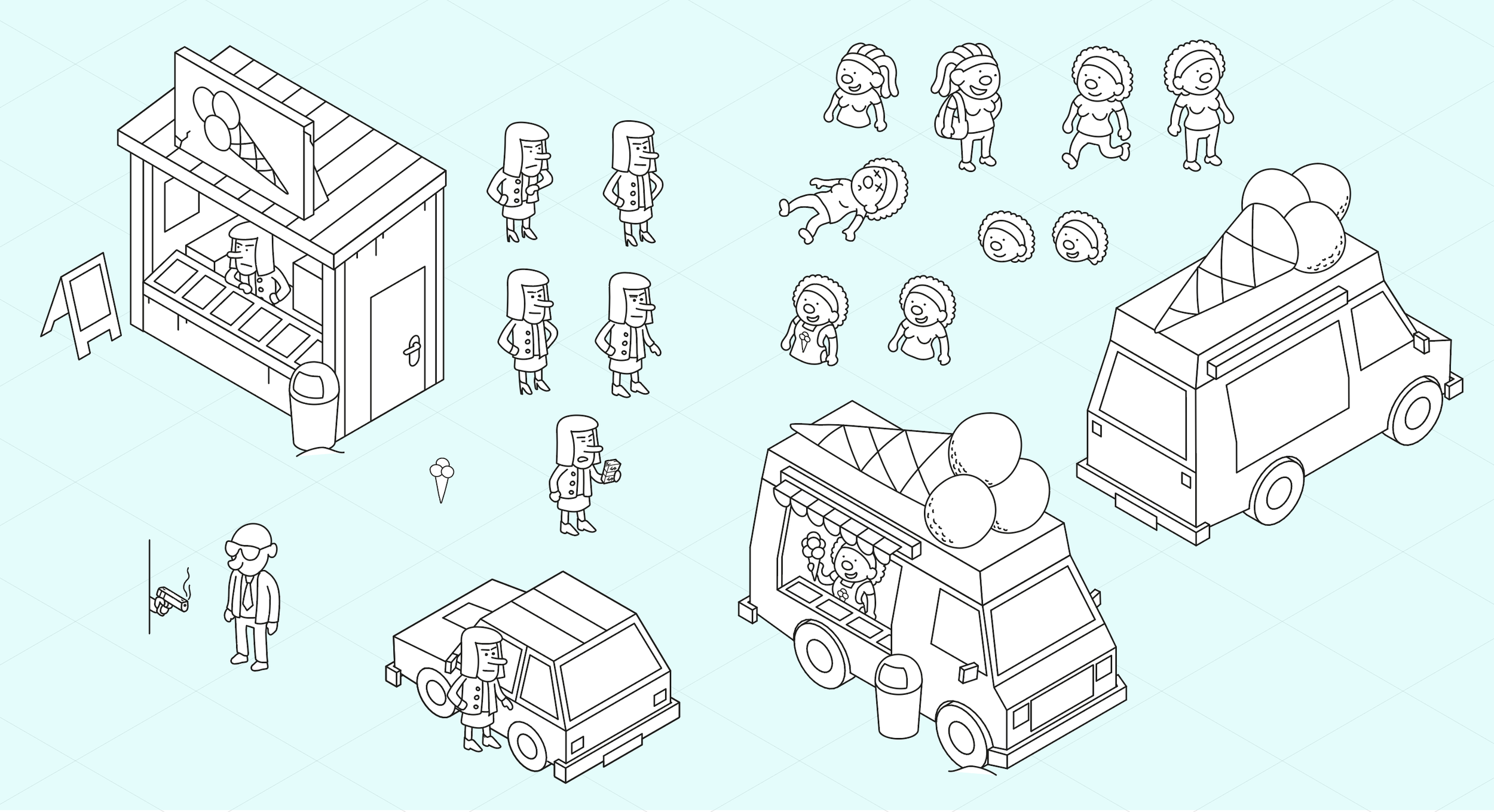
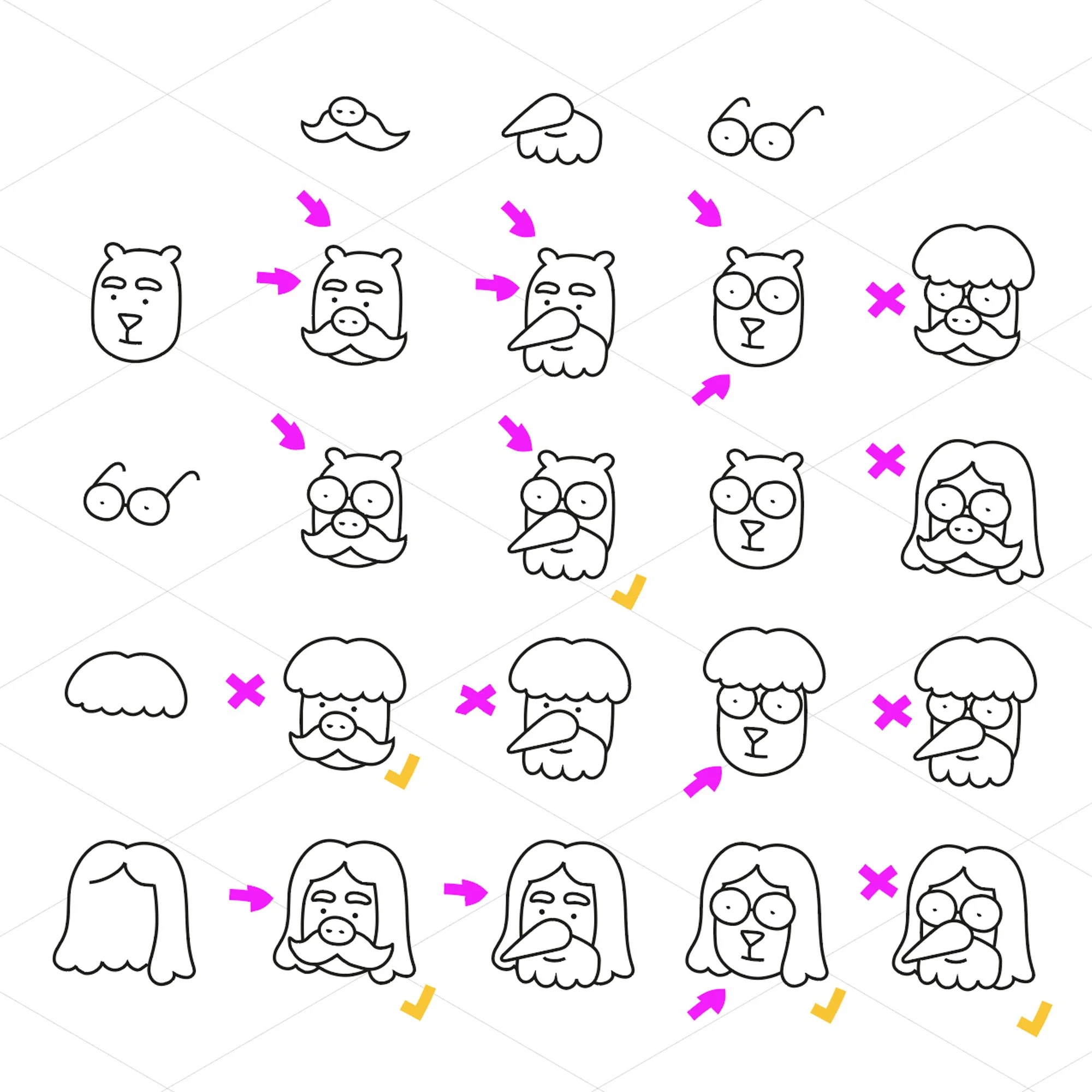
When you’re tasked with populating a city, how do you keep the characters feeling unique?
The character design is quite important. They all have to be distinguishable with the fewest possible details. Not only because of their technical size, but also because of the player’s attention. To make tracking down an 8mm tall character over the map fun, it is important to have a ‘hook’, one key feature that makes them unique. It’s also about the team communication during the game: It’s important that the players are able to identify a character by a vocal term like the egghead, the dog lady, the frog, for instance.
When it comes to designing a new main character, it depends on the story, but also on the mechanics. First question is: Will I have a section where the player has to track the character from bottom to top of the map - meaning that you will see him from behind? Then, a distinctive head silhouette is essential to make him recognizable from behind. When I am working on a new case, I like to plan the paths on the map early, so I can answer questions like this before I work on the characters. Also, the scenes and puzzles do influence this process.
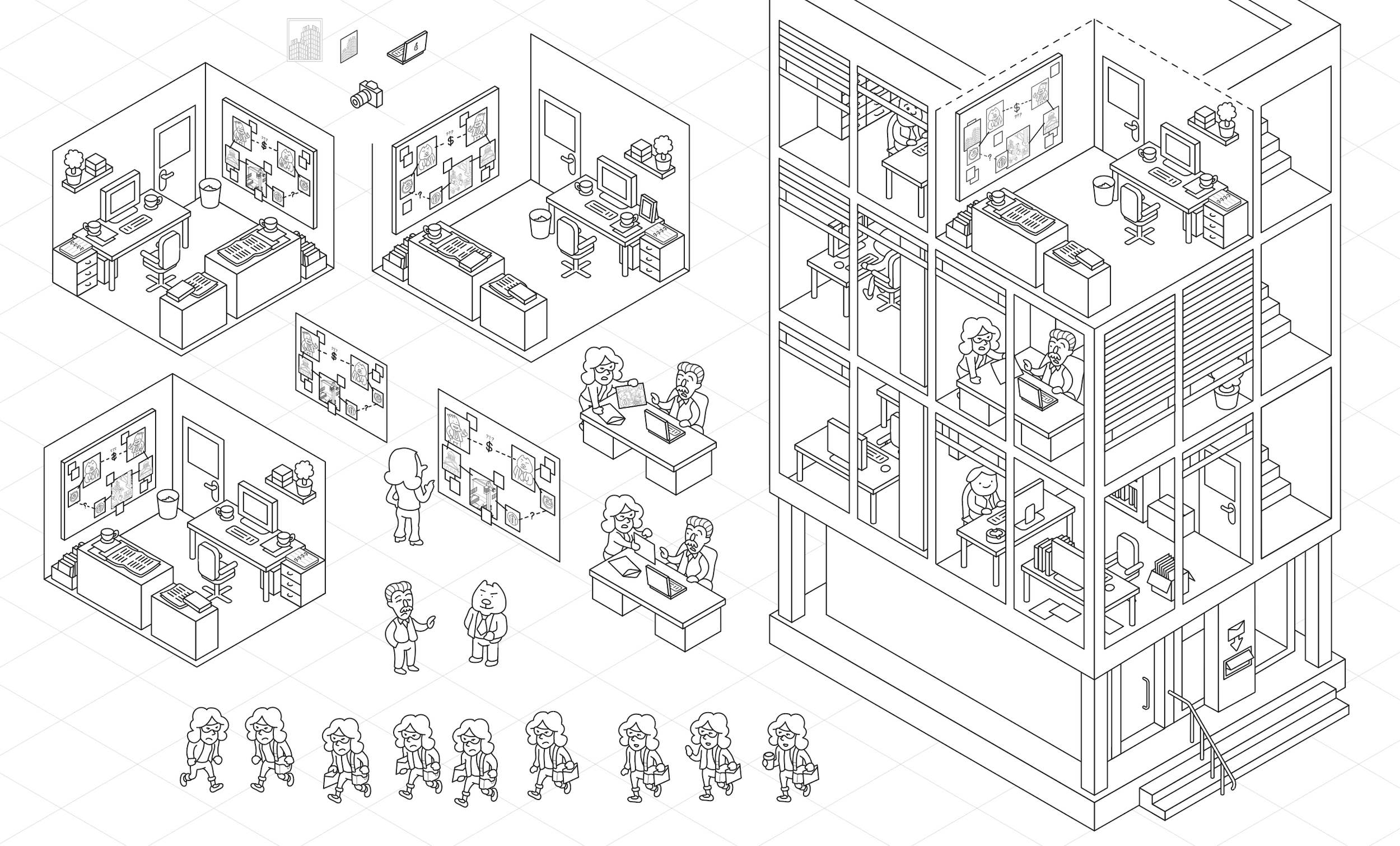
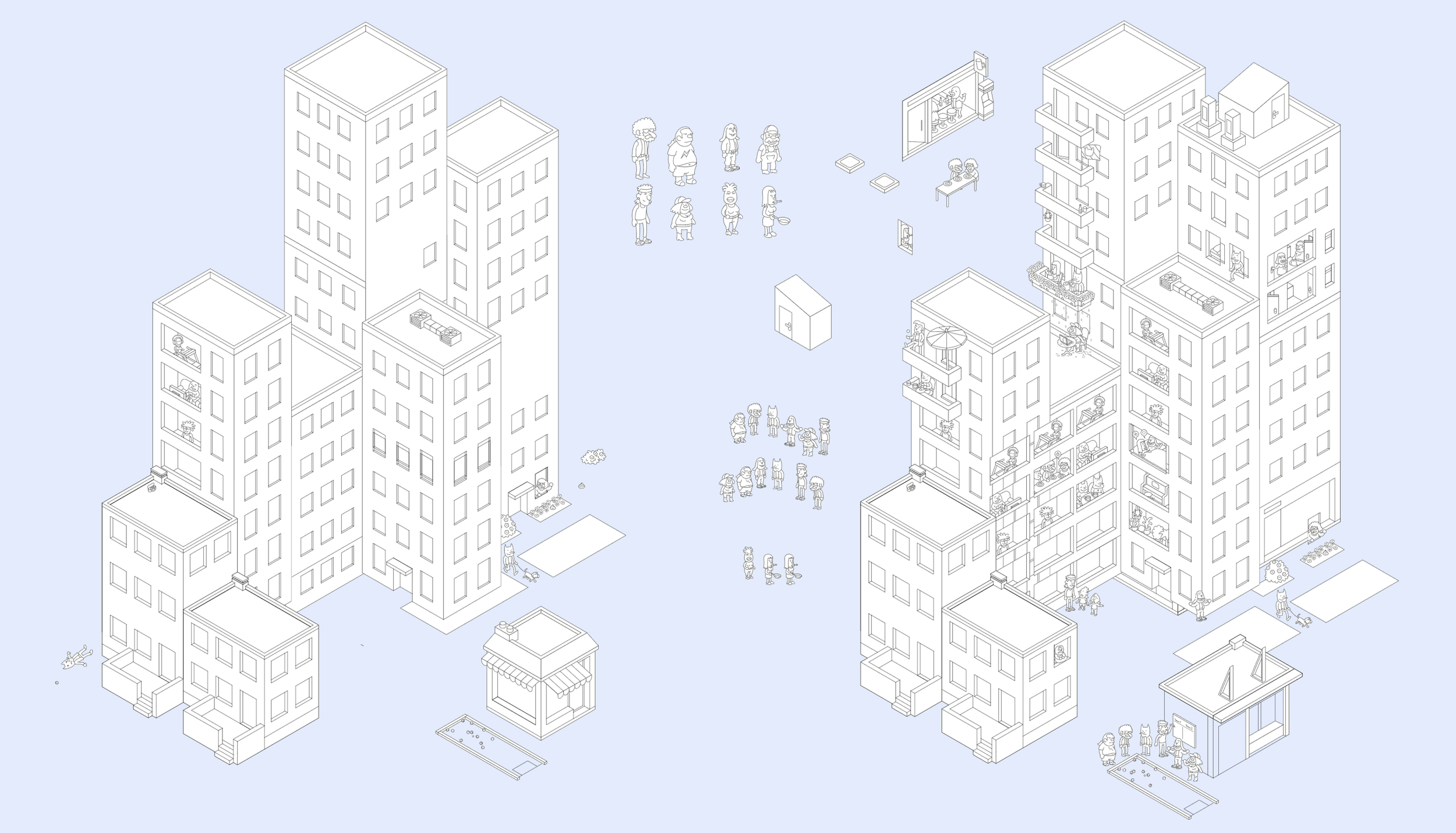
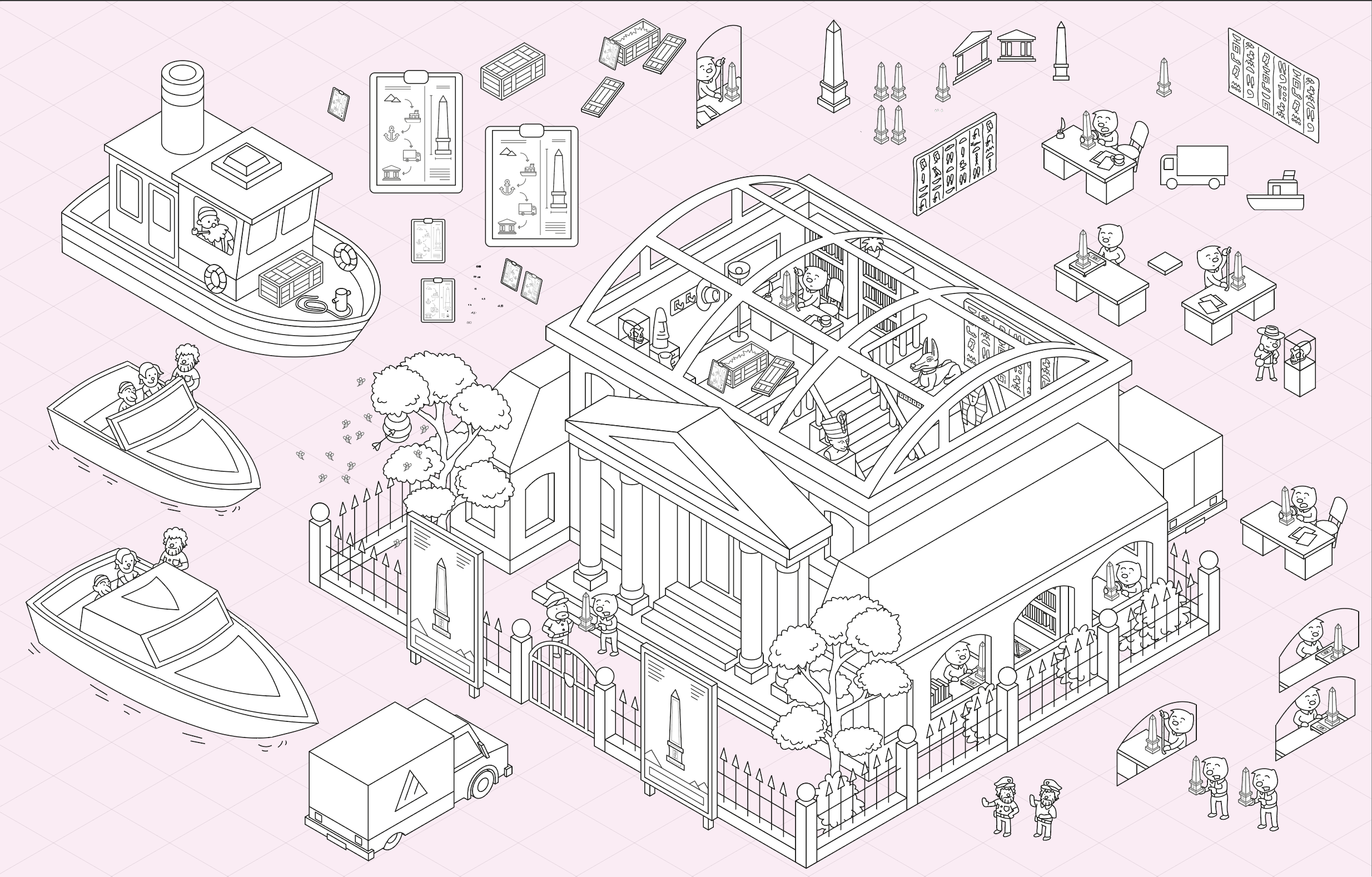
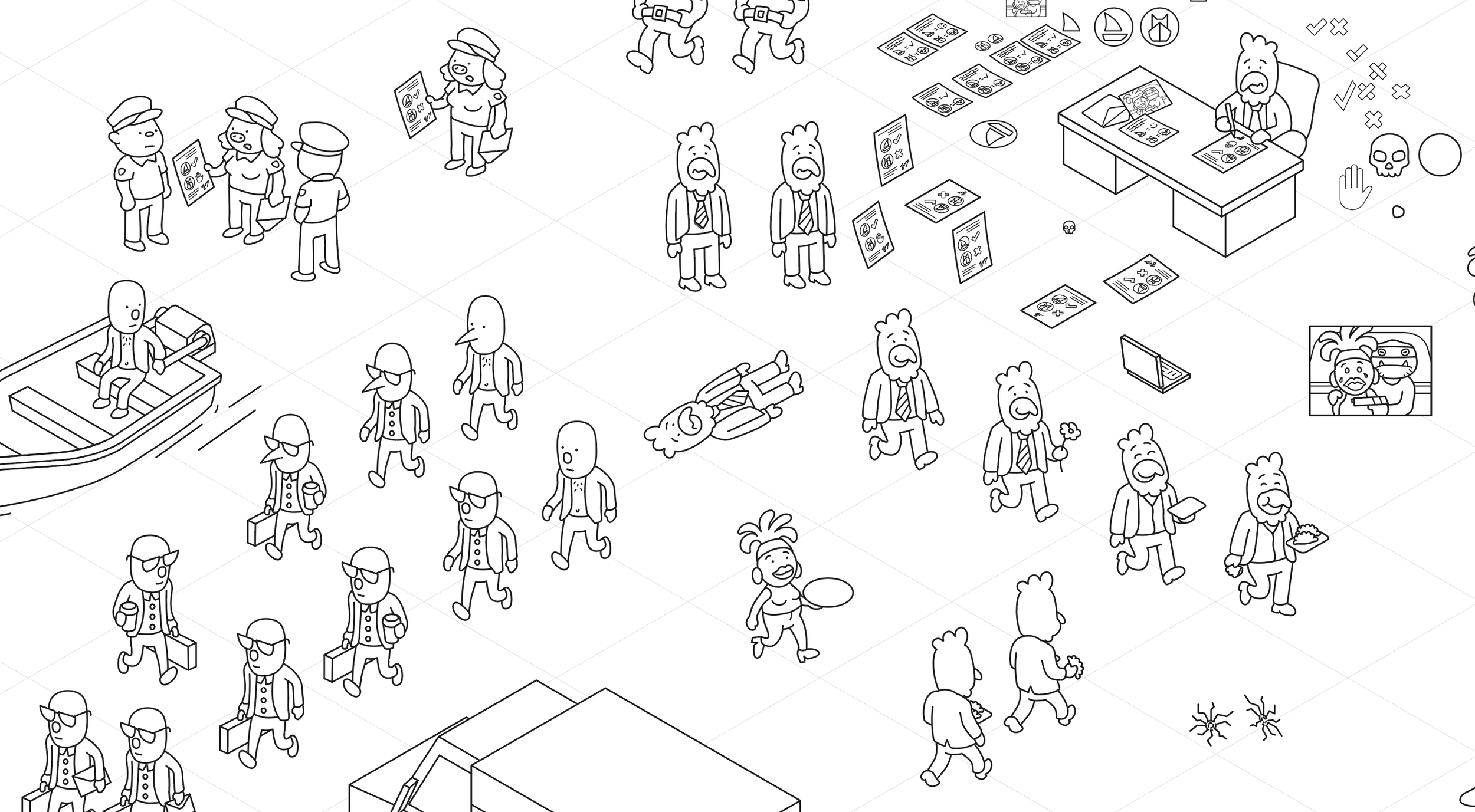
Sometimes it’s important that a character is not too noticeable, sometimes I need a special detail for a special puzzle, and so on. For example, I was recently working on a case for a mobile game, where you see different details of the thief at different spots, and by combining that information, the player has to find the perpetrator. In this case, the design is entirely based on the mechanics.
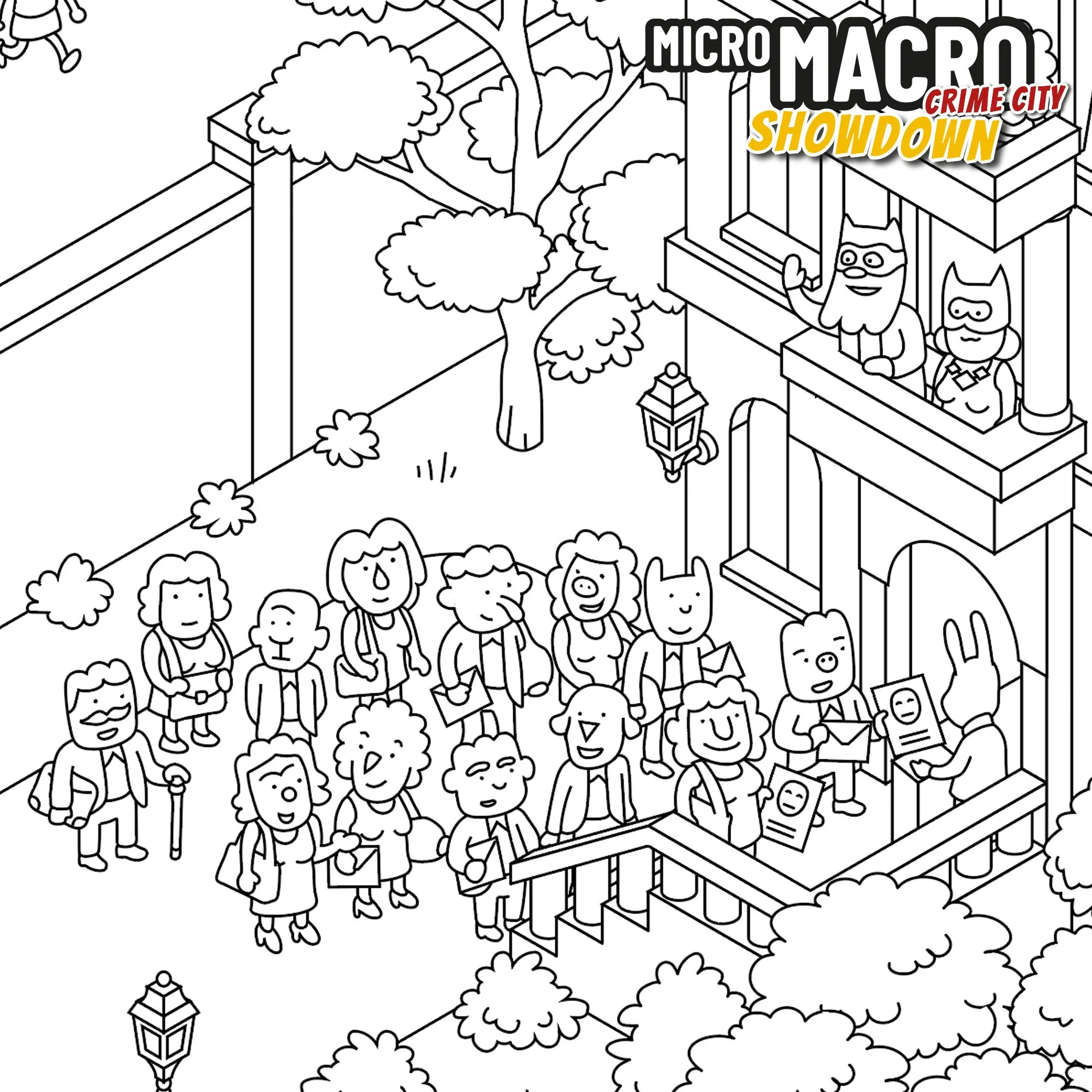
Then there are other, more story-driven cases where the design is largely shaped by the character's role. In Showdown, there is a story about a group of market sellers, and they all have headshapes and names that relate to vegetables, like Tom Ato, Erica Rott, Poe Tato (don’t know how well this works in English; in German, it’s quite funny).
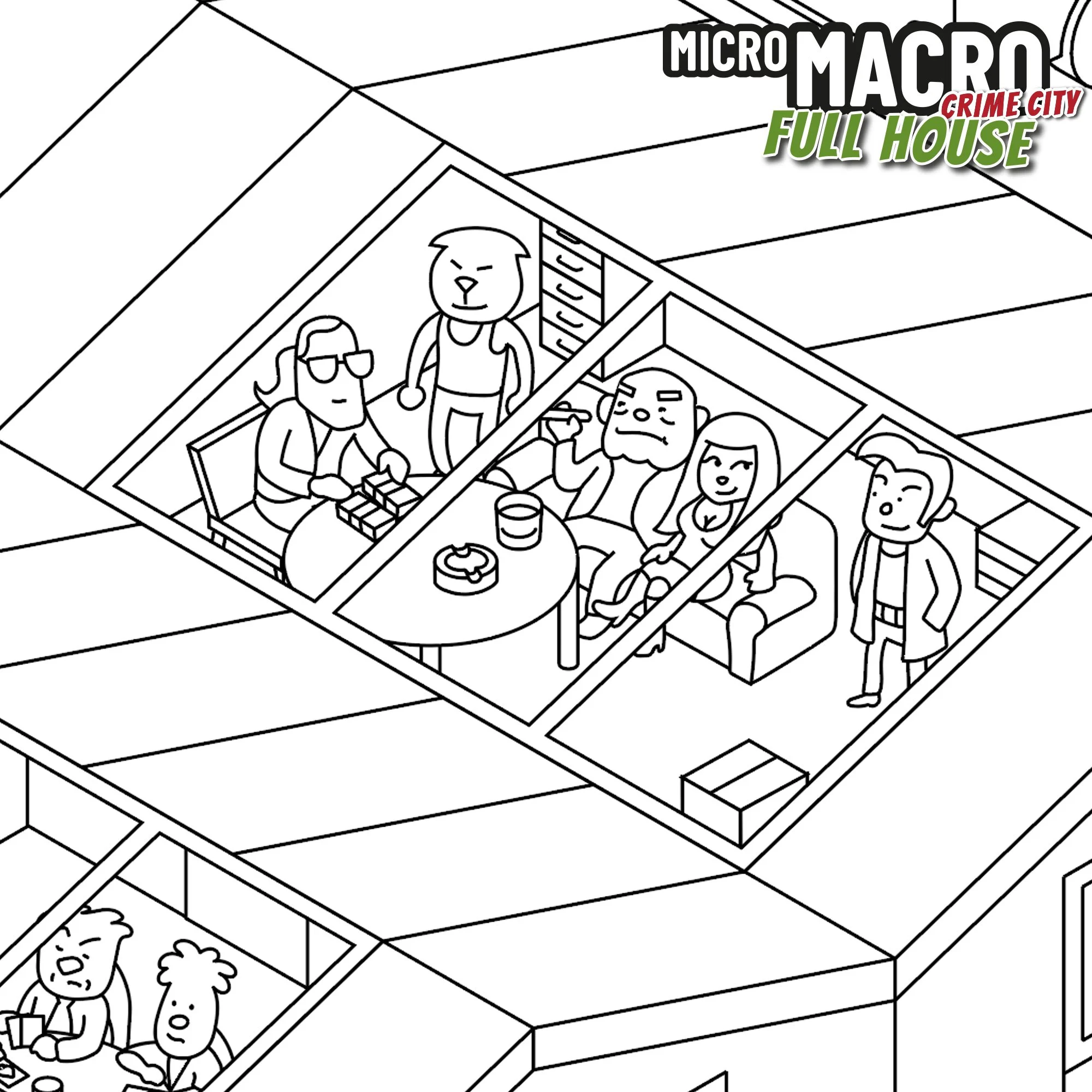
Sometimes we also use reference of real people in our lives. The thieves who rob the museum in "Full House“ are my nieces and nephews; the bank robbers are Tobi, Daniel, and me.
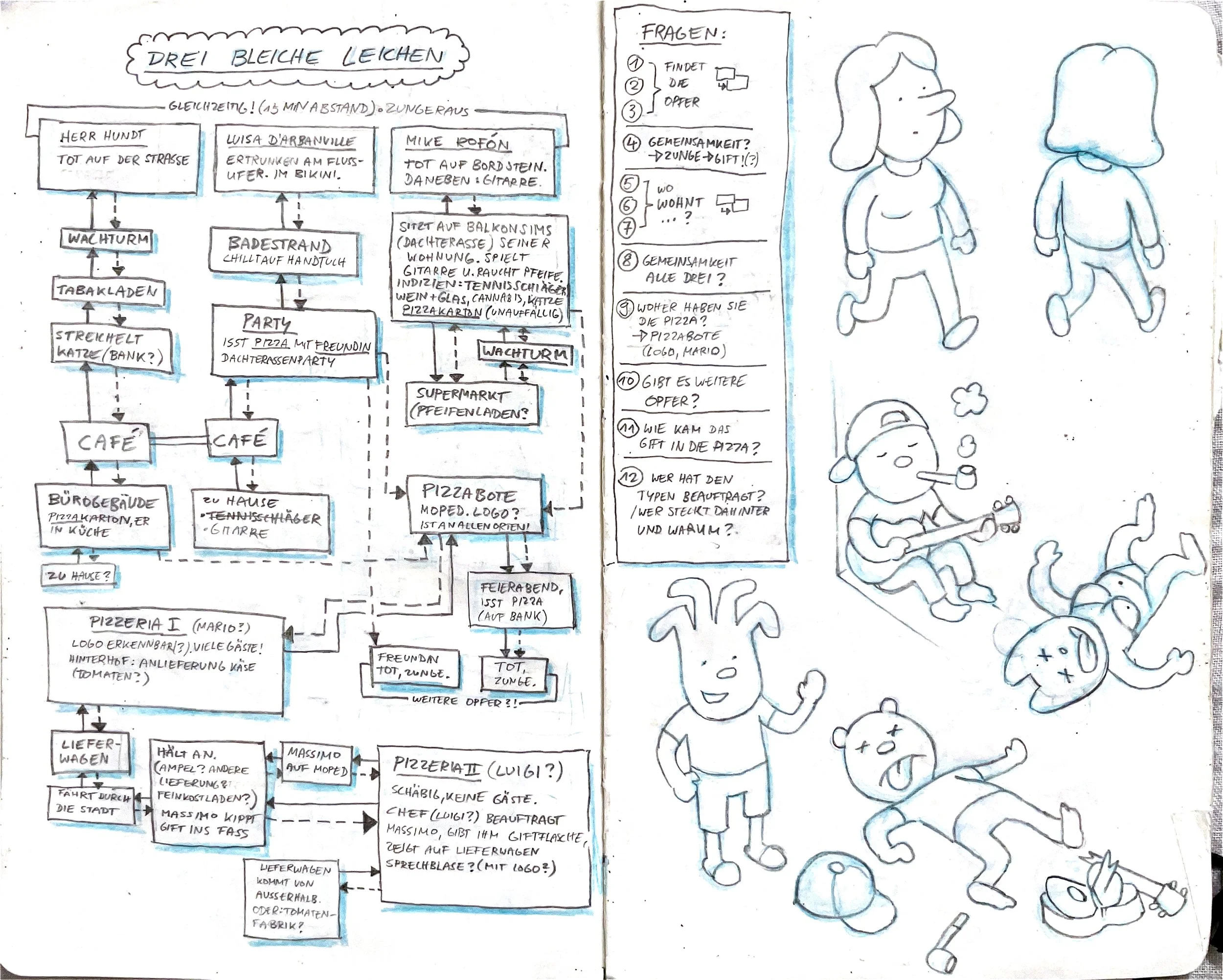
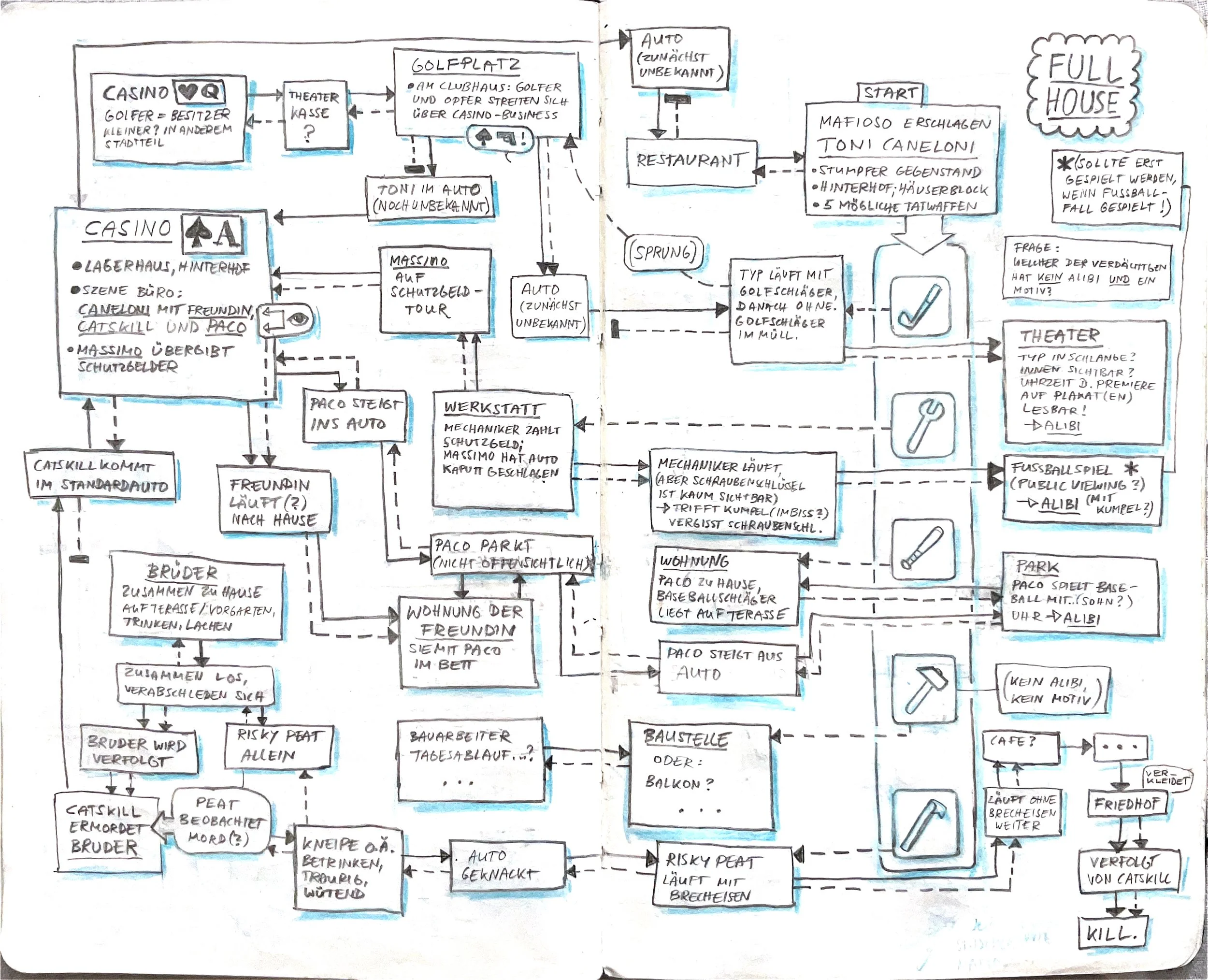
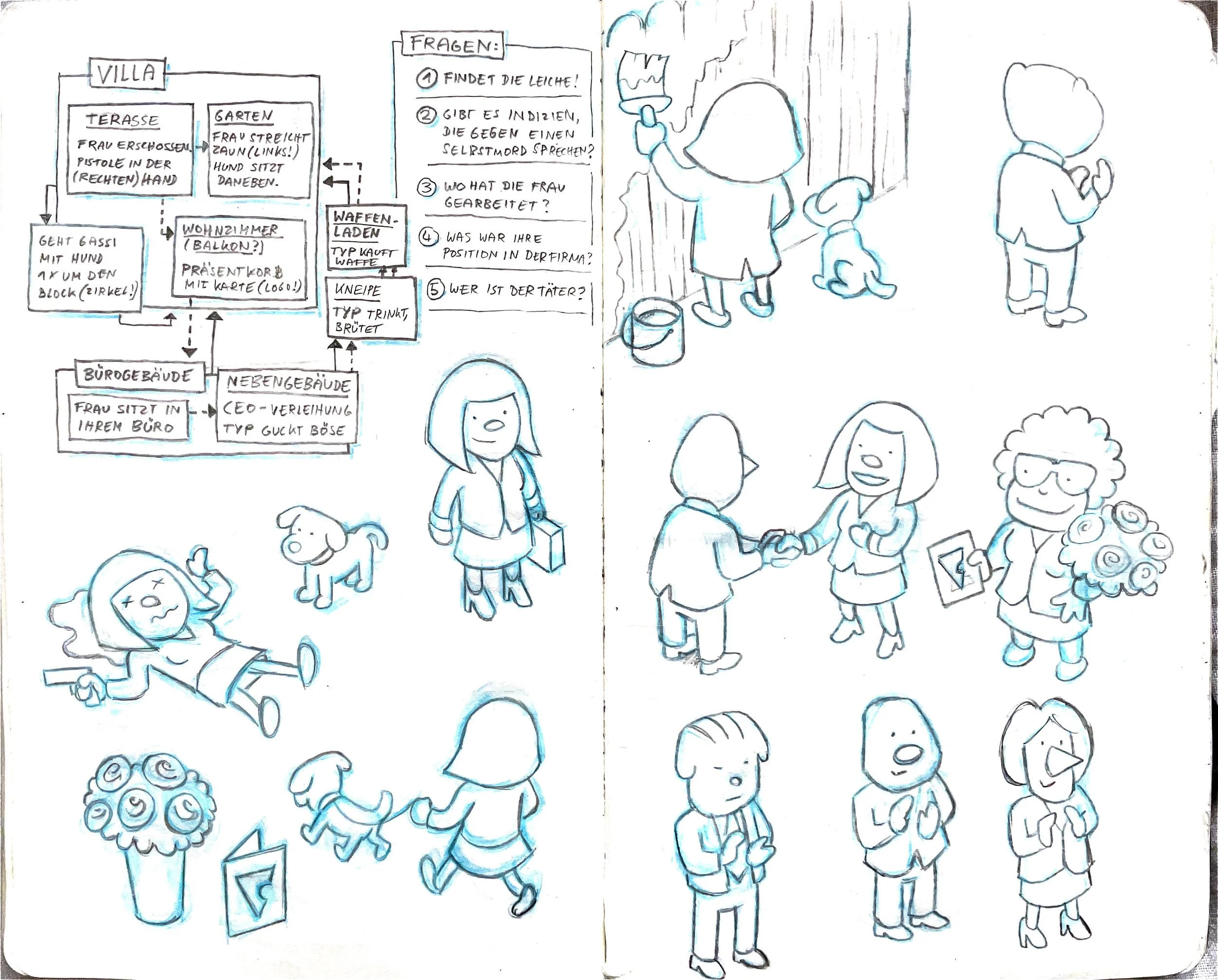
Do you have any favorites among your hand drawings?
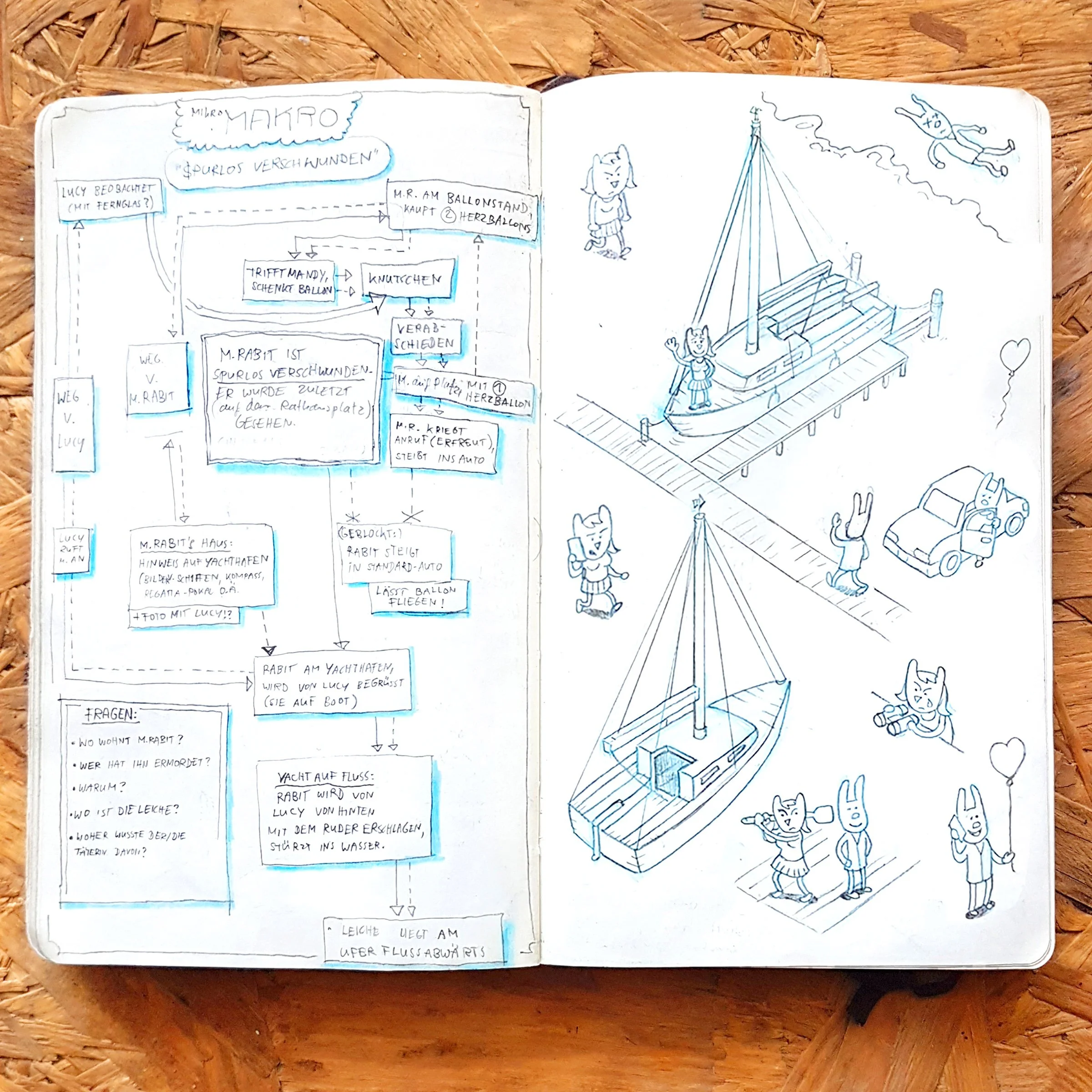
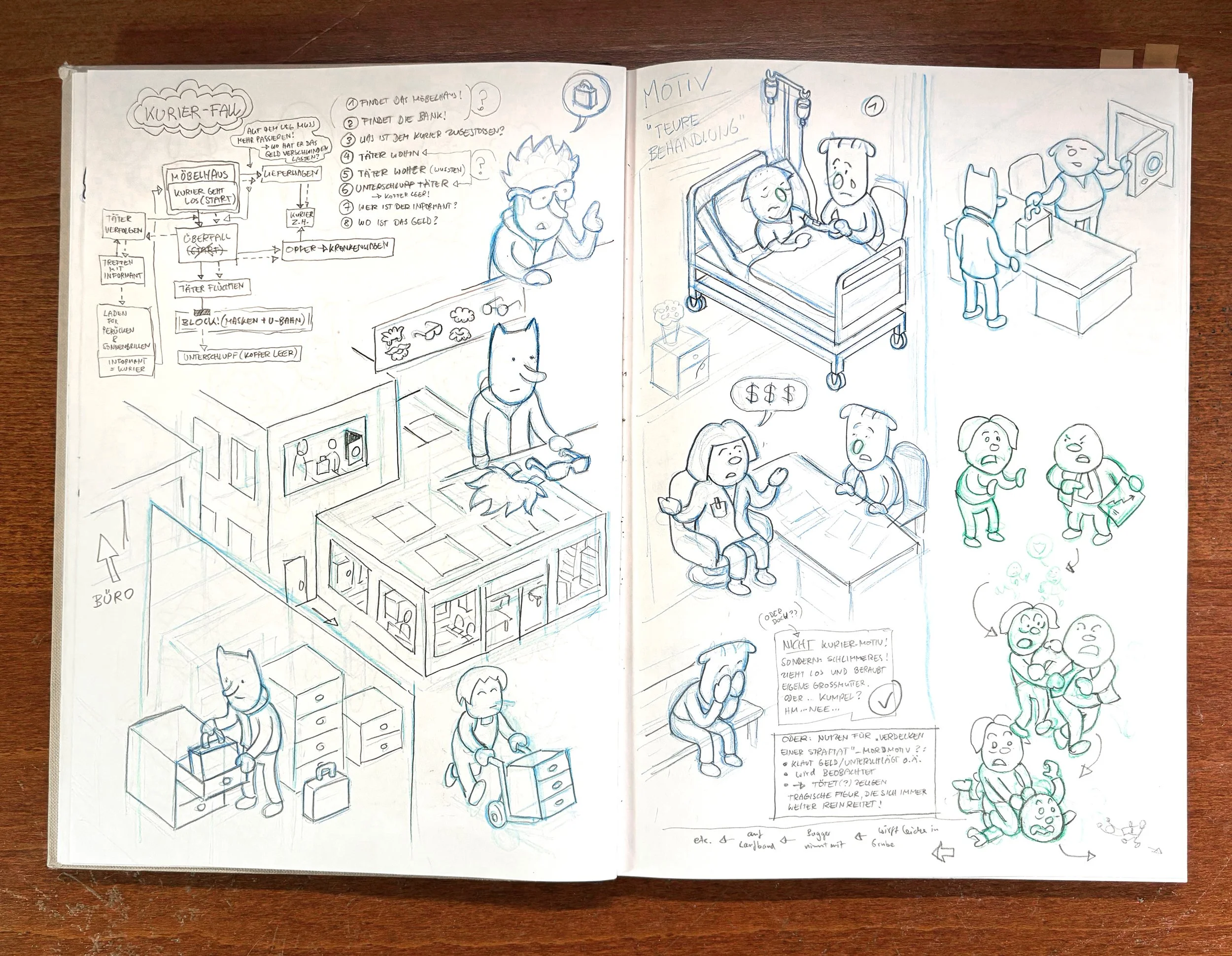
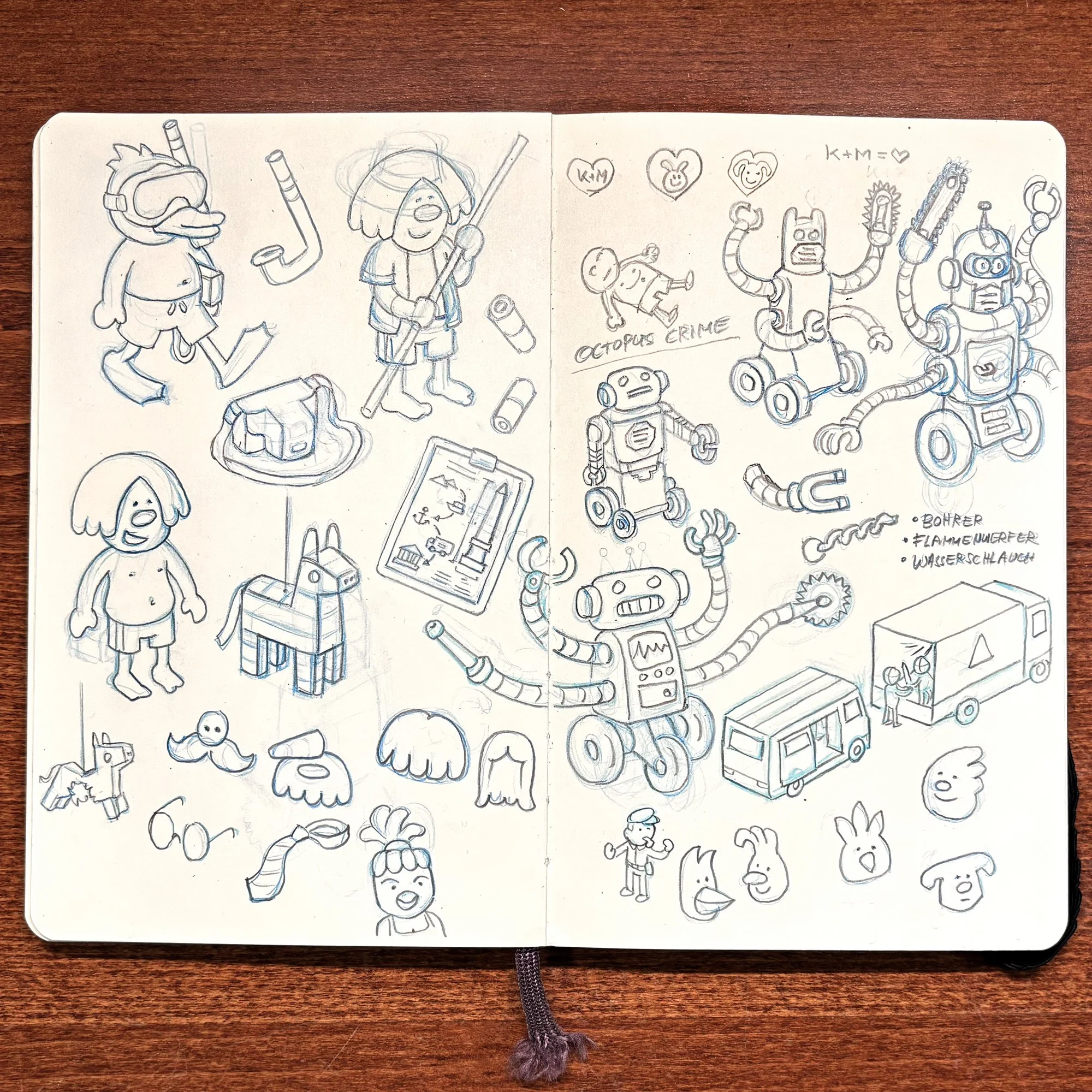
While working on new cases for the second part of MicroMacro Full House, I made elaborate planning sketches in my sketchbook. Nowadays, I rarely do it because I am too lazy, and with experience, I can plan stories with just a few notes. I haven't shown them yet, so this is a nice opportunity. At that time, I was in France at the Atlantic on a camping site, alone for a few days. I wanted to surf, but I was injured or lazy or waiting for better waves, I don't know, and I was sitting in a café all day working on those. It was a pretty nice time.
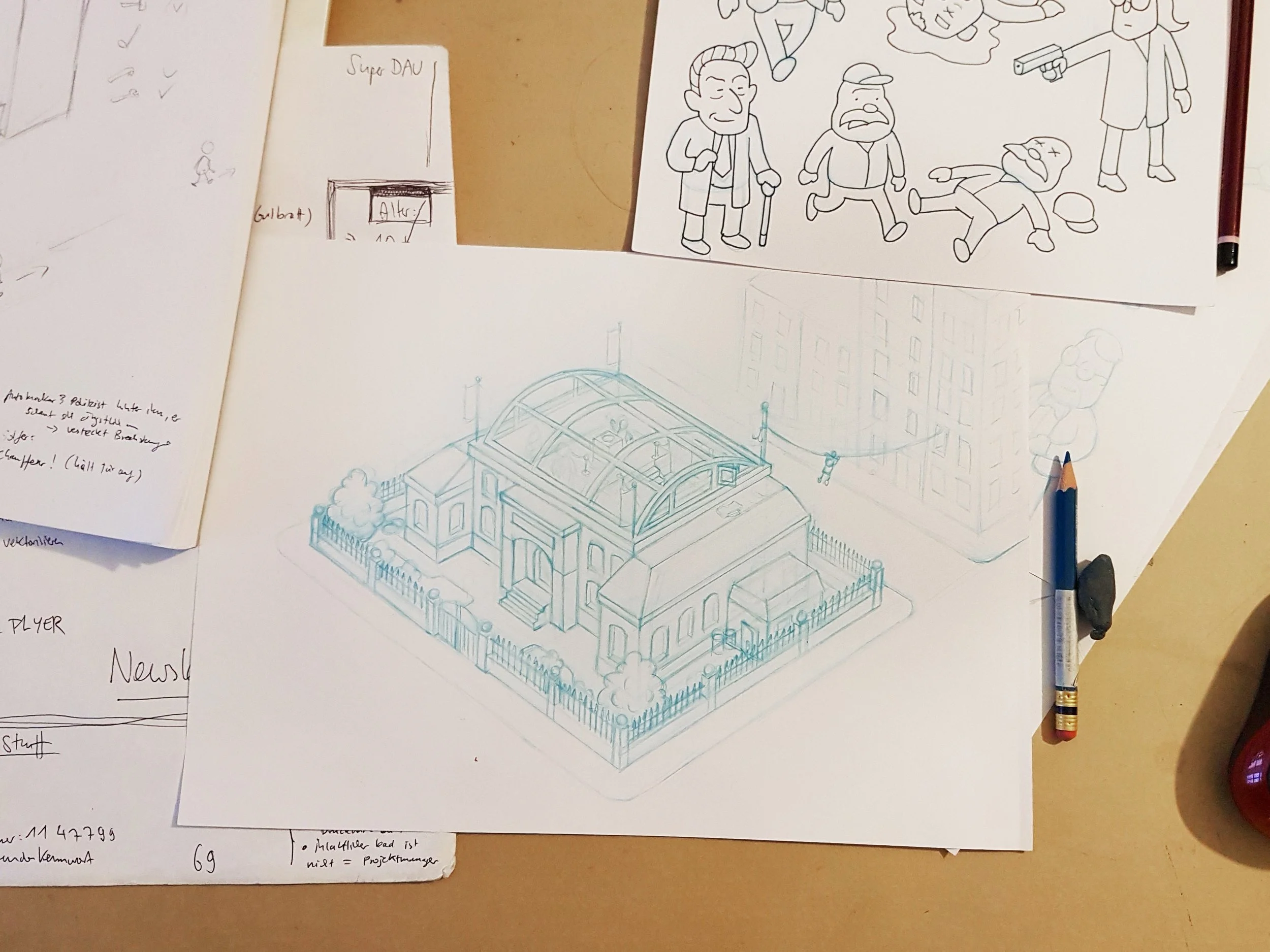
And, to show something not MiMa-related: At that same time and same café, I was also starting to develop my first sketches for "Project Asterope", and one of them I found in the same sketchbook. I still like it, even though my skills were quite low at the time; it turned out pretty decent.
MicroMacro: Downtown Detective is OUT NOW for iOS and Android. What should fans of the series expect from the digital adaptation?
The mobile game is more than an adaptation of the board game; it features an entirely new city map with brand-new cases, specifically designed for the screen.
Quite early in the process, we realized that the experience of playing MicroMacro on a screen is very different from that of a physical map. We spent a long time identifying the differences, issues, and new possibilities of the medium. It was important to us to create a game that retains the spirit of the Crime City series but leverages digital capabilities. Therefore, we produced MicroMacro: Downtown Detective entirely by ourselves. Felix Weiler, a programmer and a friend of ours, joined the team, and together we founded the studio "Soft Boiled Games".
We had to find new ways to structure the map, adapt the case design, and develop the interface and UX in order to achieve the easy access and fluid gameplay of MicroMacro.
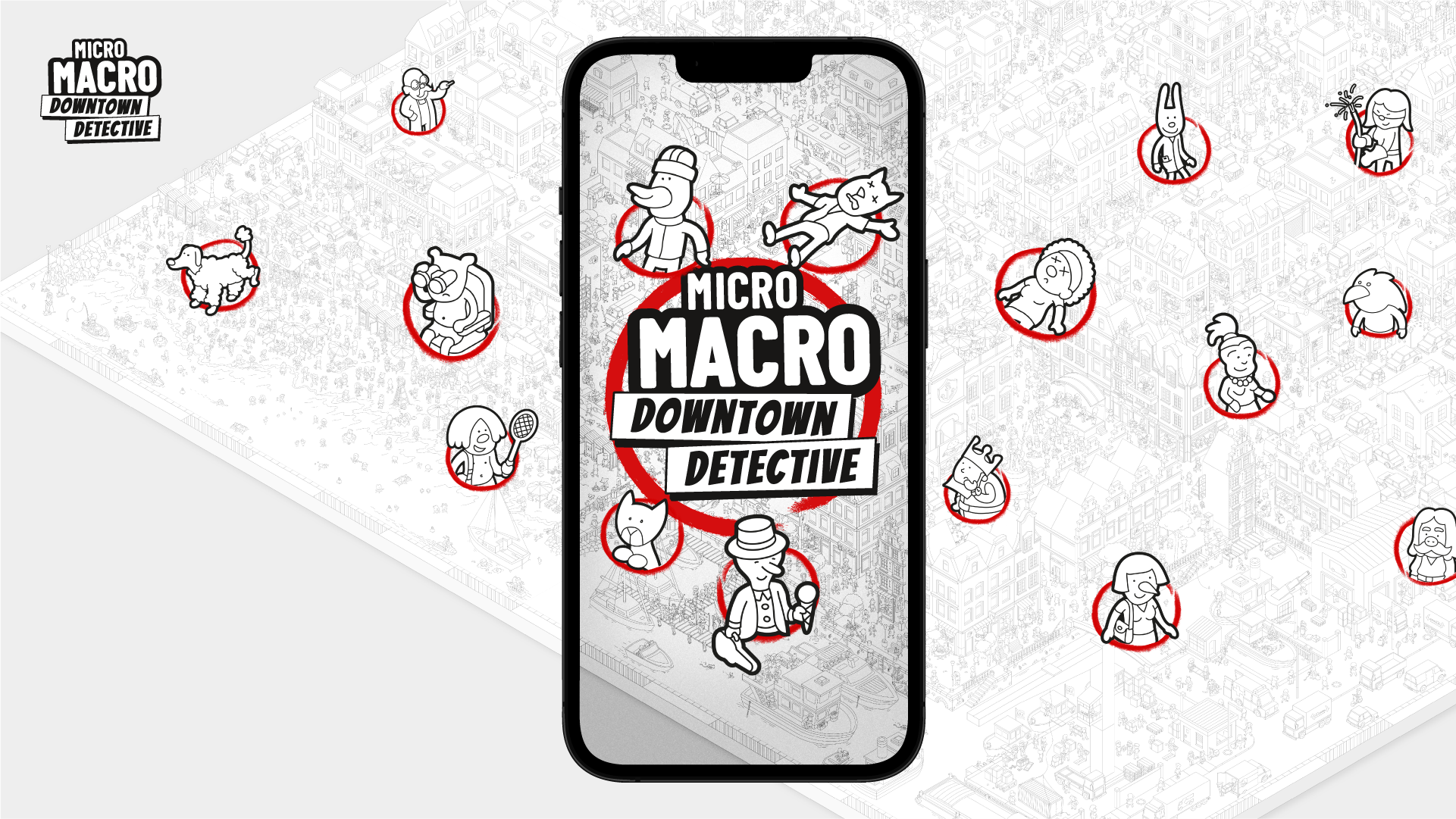
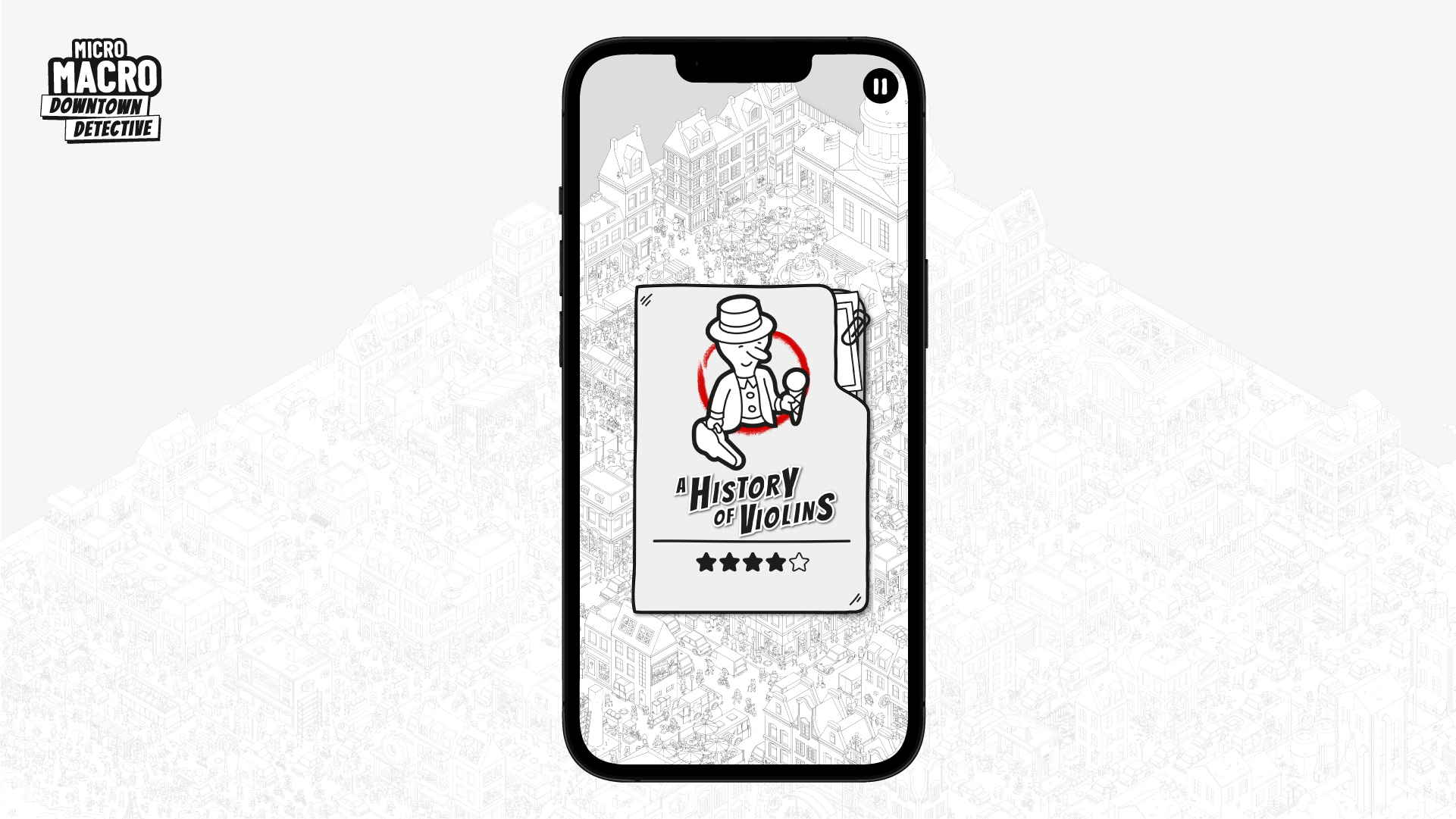
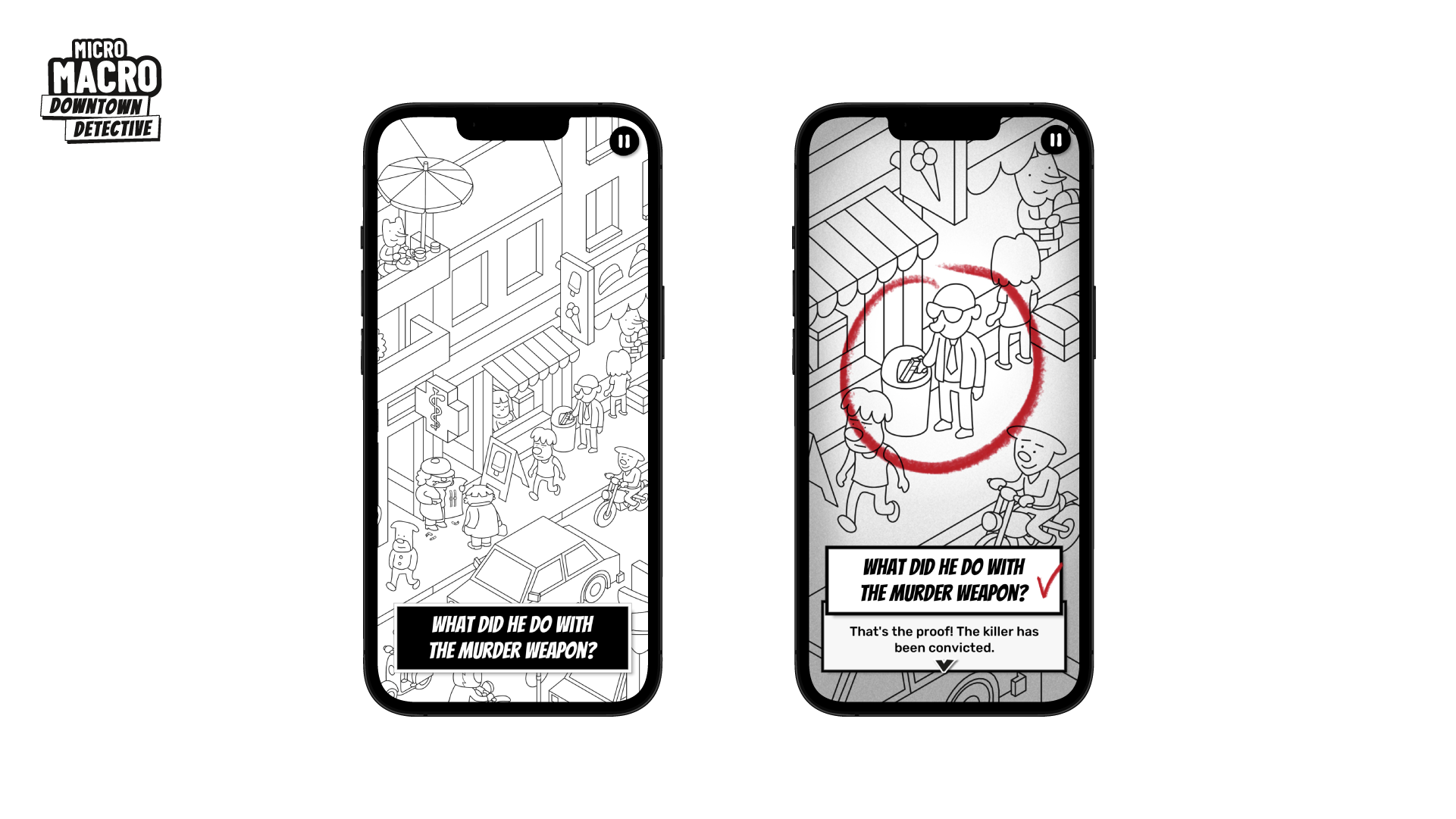
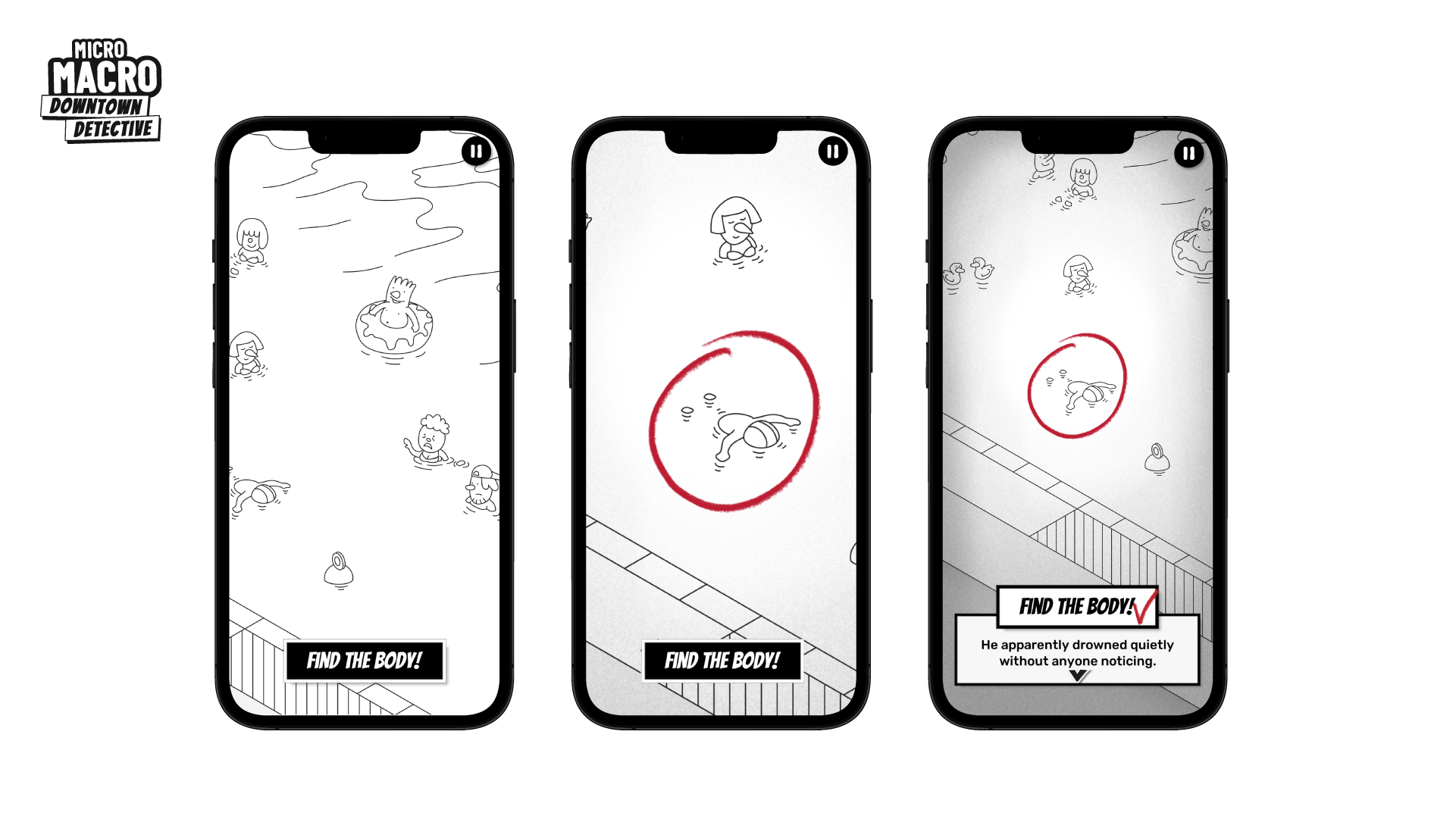
We wanted to create a standalone game that would appeal to new players who don't play board games and also satisfy MiMa fans. And of course, offer something new, take advantage of the digital opportunities. We had many ideas, and we even had to hold ourselves back at times to avoid diluting the concept's original DNA. For example, using animation was tempting, but it would, in a way, contradict the core concept of a still image and create issues with user expectations and experience.
We focused on a few new digital features that enhance the concept organically. Like the possibility to zoom in very deeply. Or, at some points in the story, you will do a search warrant and open up rooms in buildings. Those features gave us new possibilities to create different kinds of stories and puzzles while preserving the spirit of the original game.
The player's feedback is overwhelmingly positive, and we are very excited about it! We recently even published a first expansion. So try it out! :)
What are you reading, listening to, or looking at to fuel your work?
Regarding the stories and puzzles for MicroMacro, I used to read a lot of crime stories and listen to podcasts (crime fiction and true crime) in order to get ideas. And I got a lot of inspiration from playing other detective and puzzle games, both digital and analogue.
I am always looking for games with a strong, consistent story that's deeply interwoven with the puzzles. To mention some games I discovered over the last couple of years, which are outstanding in this quality: The Case of the Golden Idol, Return of the Obra Dinn, Outer Wilds, Perspectives (the last one is a board game, the others are digital games).
Regarding art and storytelling in general, I consume a lot of stories in comic books, movies, TV shows, digital games, animation, and anime. It's incredible how many good stories have been made in the last ten years, and how the art of storytelling has improved. I think that we are living in a Golden Age of storytelling right now!
I am very interested in storytelling and worldbuilding, since I have been working on another project for many years, “Project Asterope”, an epic Sci-Fi story I want to tell in a comic or picture book. But I am far from good enough at drawing and writing, so while I practice my skills, I soak up all the inspiration and ideas I can get.
The greatest artists in this regard, for me, are Hayao Miyazaki and Moebius. Speaking of modern animation art, I guess many of your readers will know the series Love, Death and Robots, Scavengers Reign, and Arcane – this is the kind of avant-garde in worldbuilding and storytelling that I am speaking of. Apart from these giants, I want to mention a few webcomic artists I discovered lately, who might be less known, but tell incredibly good stories:
Evan Dahm (Vattu, Third Voice), Anne Szabla (Bird Boy, Banquet), Minna Sundberg (Stand Still Stay Silent).
Of course, I follow the work of other contemporary illustration artists online. It's incredible how the digital era led to an explosion of artists, designs, and styles.
Finally, where can we find more of your work?
My online portfolio is outdated, so I'll skip it. You can find my work on my Instagram @jojosich.illustration. You will mostly find MicroMacro content there lately, but I plan to release other work from the worldbuilding project I mentioned. It's a long process; there are already many sketches and drawings. So if you're interested in that, follow my account - and have some patience ;)
Regarding MicroMacro, you will find all information on our website micromacro-game.com, and even more content on our Instagram @micromacro_game, like creative process and behind-the-scenes insights. If you are interested in stuff like this, we also have a newsletter where we frequently (but not too often, promise!) share insights from the creative process behind the series.
Enjoying the site? Consider supporting it by sharing the articles you read.
For more great insights into board game art, check out the interview archive.